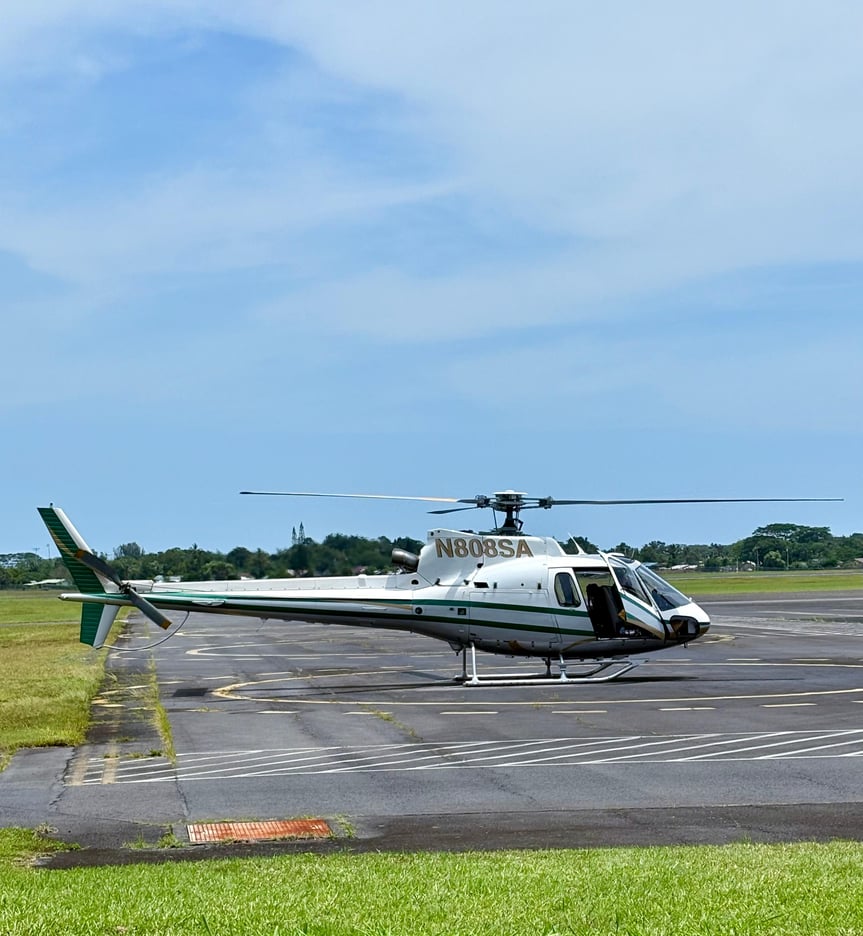
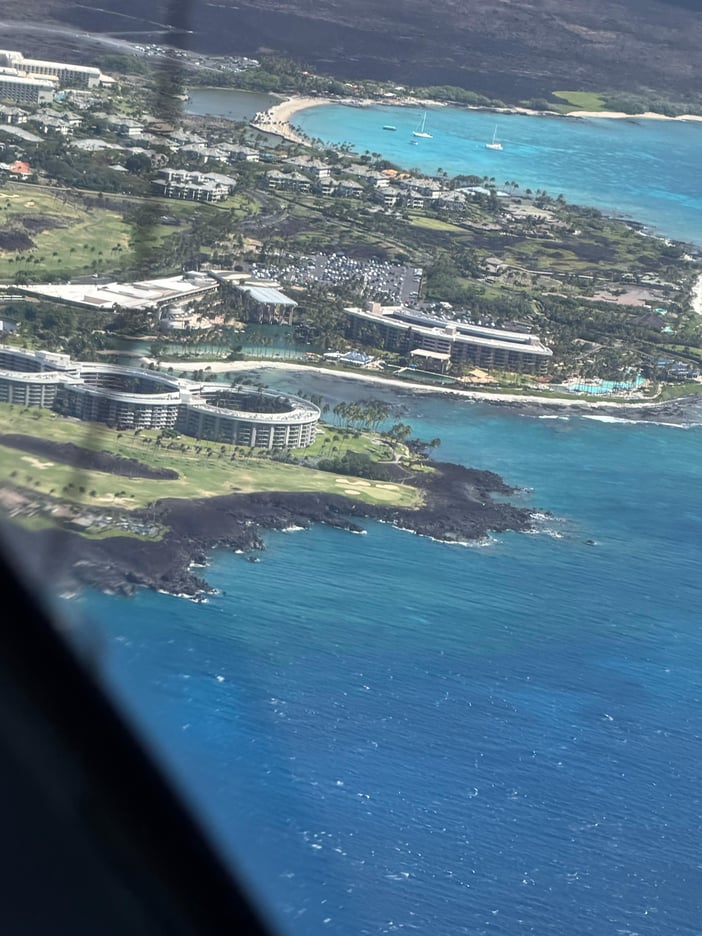
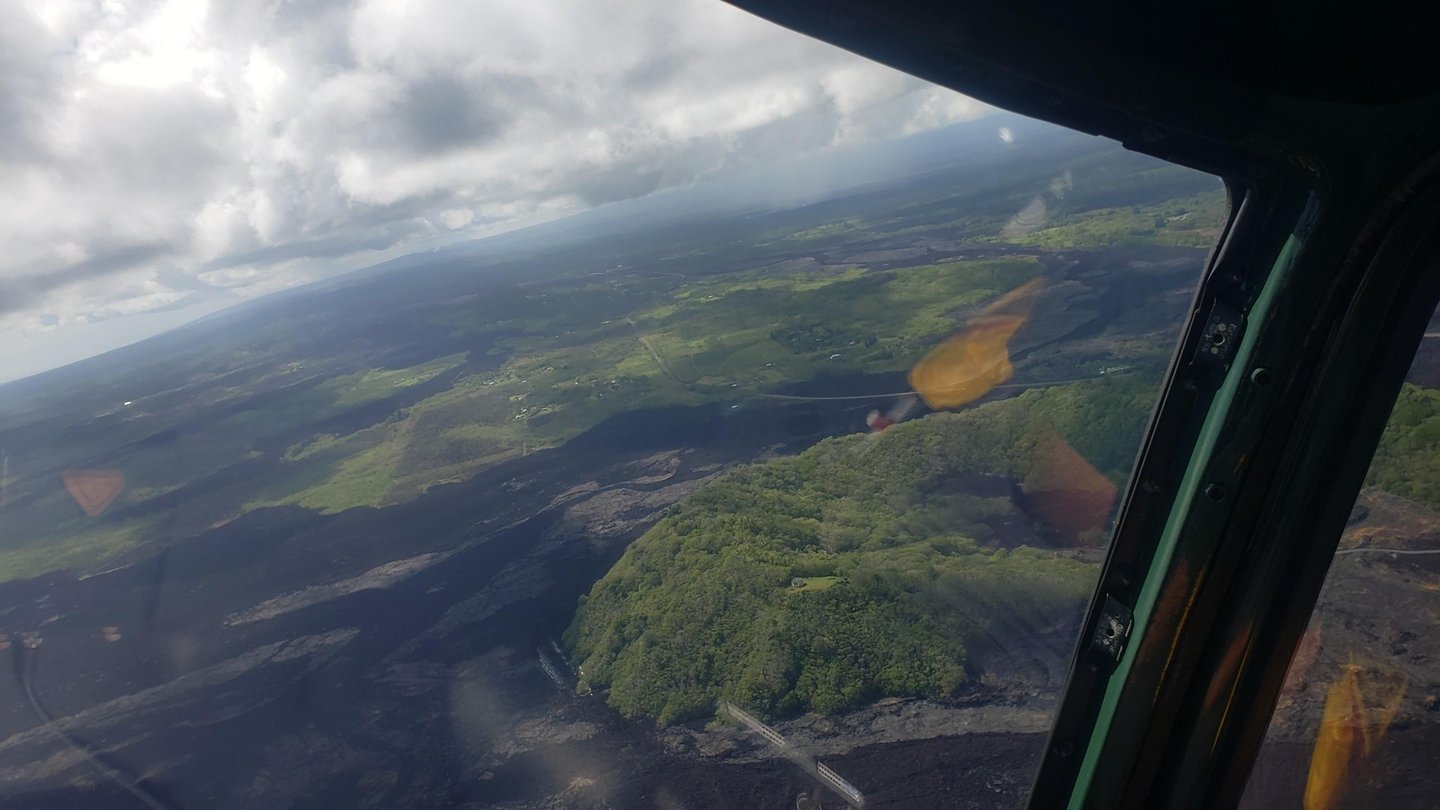
Big Island Helicopter Tours - Hawaii Island Flight Options
Book a Big Island helicopter tour for lava fields, Kohala valleys and waterfalls no road can reach. Certified guide pilots, Eco-Star helicopters with wide windows, and departures from Hilo, Kona or Waikoloa, so your flight starts near where you stay. See the island whole from the air, then book the route that fits your trip.
4.5★average rating314traveler reviews100%free cancellation24countries travelers came from
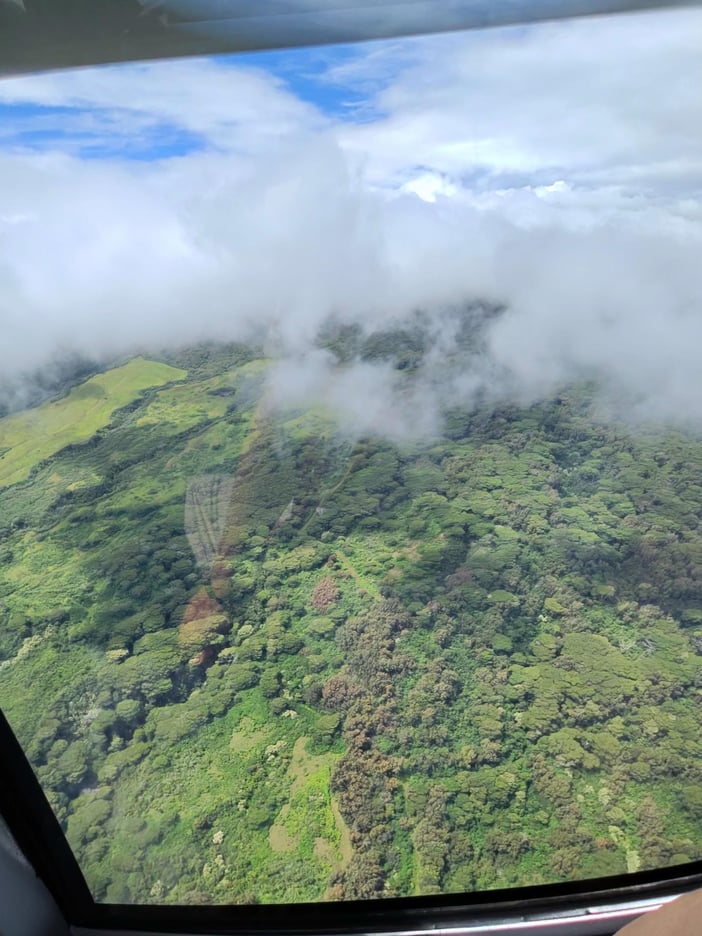
Choosing between Big Island helicopter tours - a first-timer's guide
Big Island flights come in three basic shapes: a short volcano loop from Hilo, a coast-and-valley flight from the west side, and a long route that links both. The one thing that decides between them is where you are staying, because the island is big and the heliports are far apart.
Scuba divingWait a full 24 hours after your last dive before flying, or the operator can refuse to board you.
TimingCheck-in runs 45 to 60 minutes before departure, and arriving late can cost you your seat with no refund.
WeatherLow clouds, heavy rain and vog can ground flights or change the route, especially on the rainy Hilo side, so book early in your trip to leave days for rescheduling.
SeasonMorning departures between 8 and 11 am usually give the calmest air and clearest views before afternoon clouds build.
What to wearWear dark, solid-colored clothing so it does not reflect in the window photos, plus closed-toe shoes and a jacket for doors-off flights.
LavaSeeing molten red lava depends on what Kilauea is doing that day, and flights pause when volcanic activity or airspace rules close the caldera.
CameraOn doors-off flights every loose item stays behind, and phones and cameras need a wrist or neck strap.
Booking aheadIn peak summer and the winter holidays, prime morning slots sell out two to three weeks in advance, and doors-off seats go even sooner.
Helicopter tours on the Big Island - which one fits your trip?
Answer a few quick questions and we'll narrow the flights down for you.
1Where are you starting from?
2Who's coming?
3What's your budget?
4What kind of trip?
5What do you want to see?
Your best match
match
Hilo: Hawaii Volcanoes National Park Flight★ 4.2 (272) · 1 hour · Classic scenic flight
Popular with couples, solo travelers and families with kids or teens.
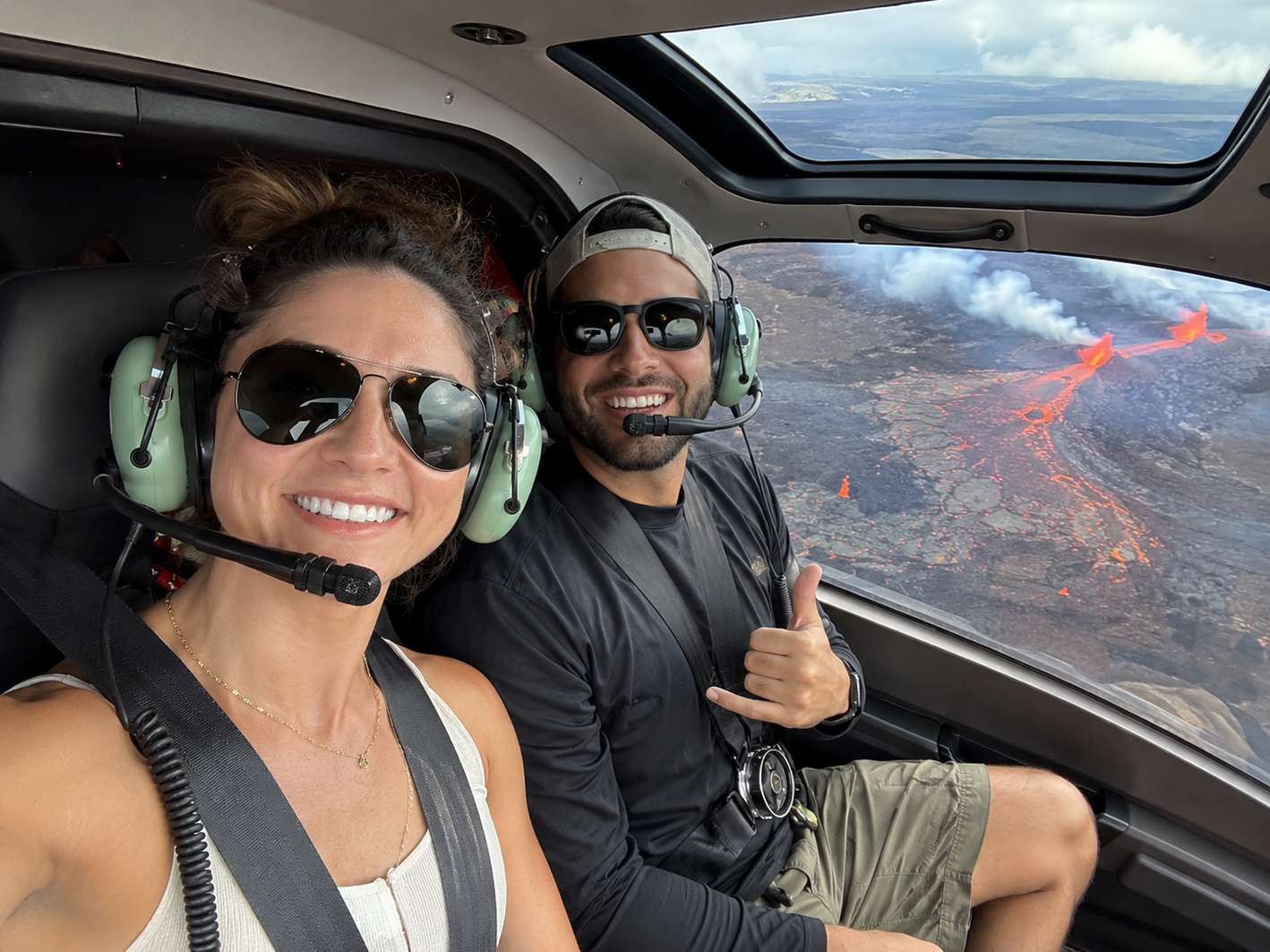
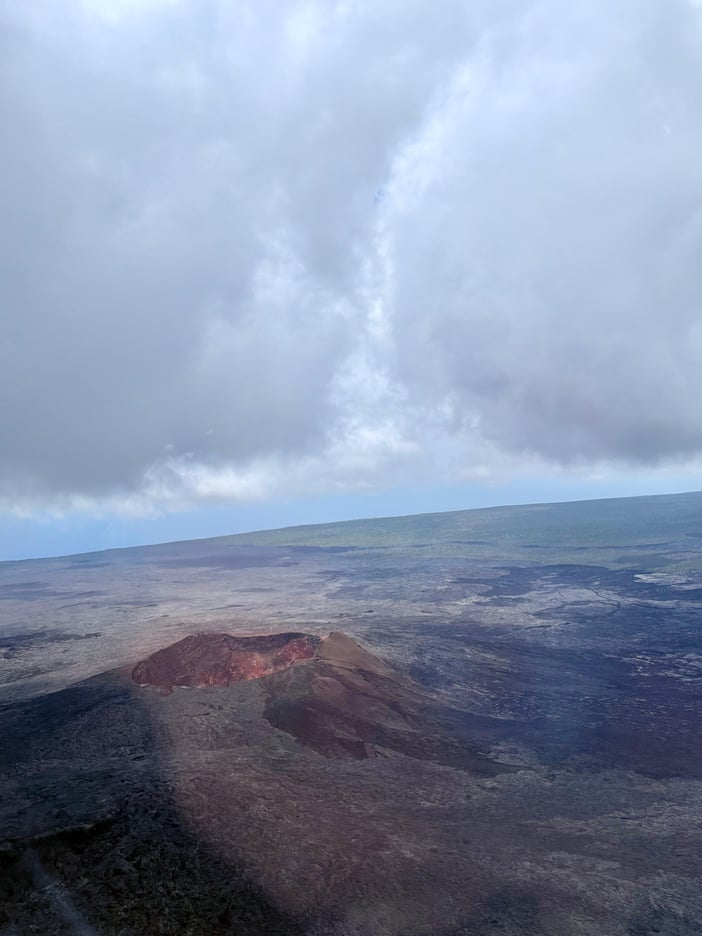
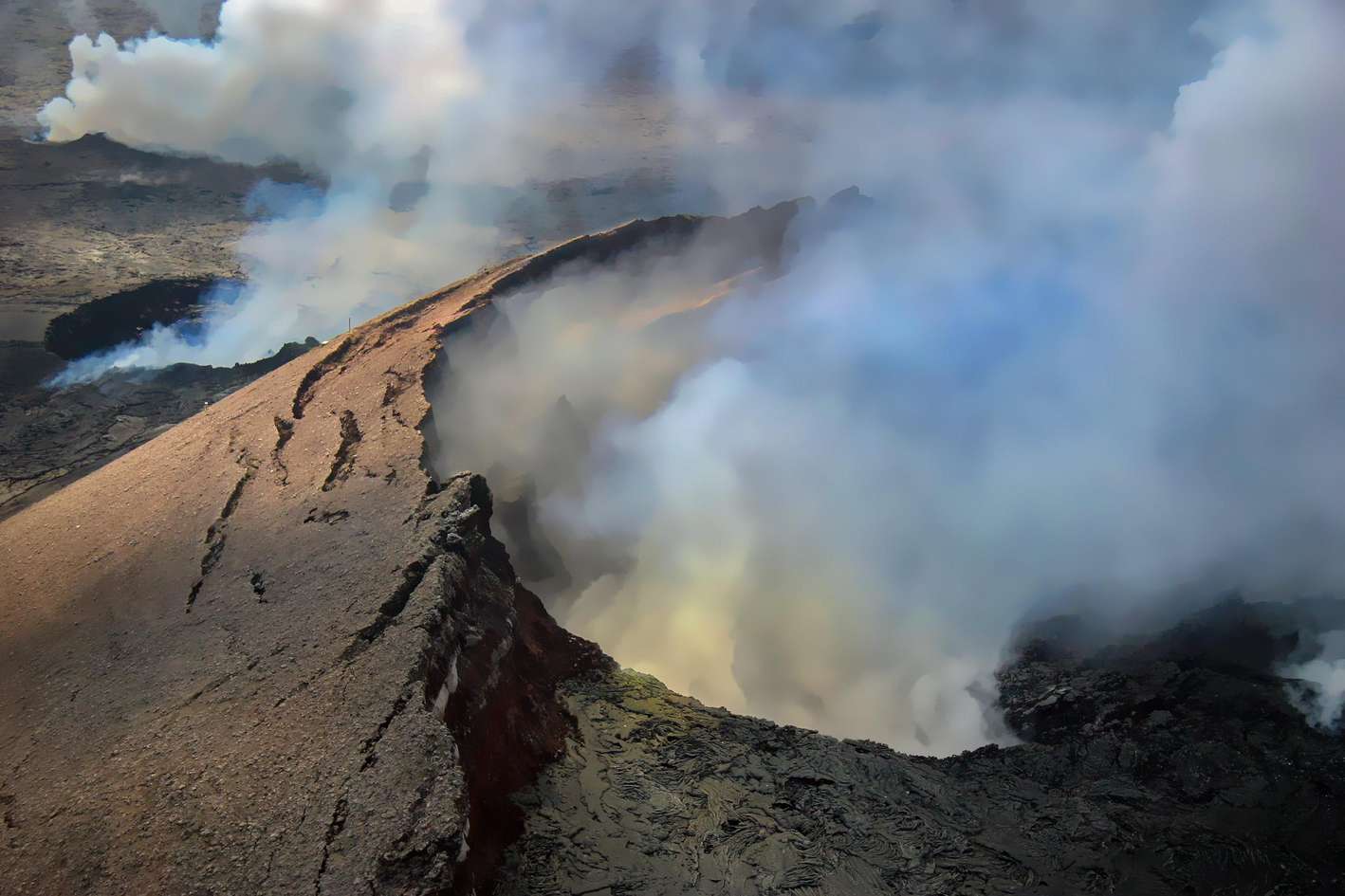
One hour straight from Hilo to the Kilauea caldera and Puʻu ʻŌʻō cone.
A short guide to helicopter tours over Hawaii's Big Island
Six flights across the island's two main corridors: volcano routes from Hilo and Kona, and the waterfall and sea-cliff country of the Kohala Coast from Waikoloa.
On a budget
1 hour·English
4.2(272)
Hilo: Hawaii Volcanoes National Park Flight
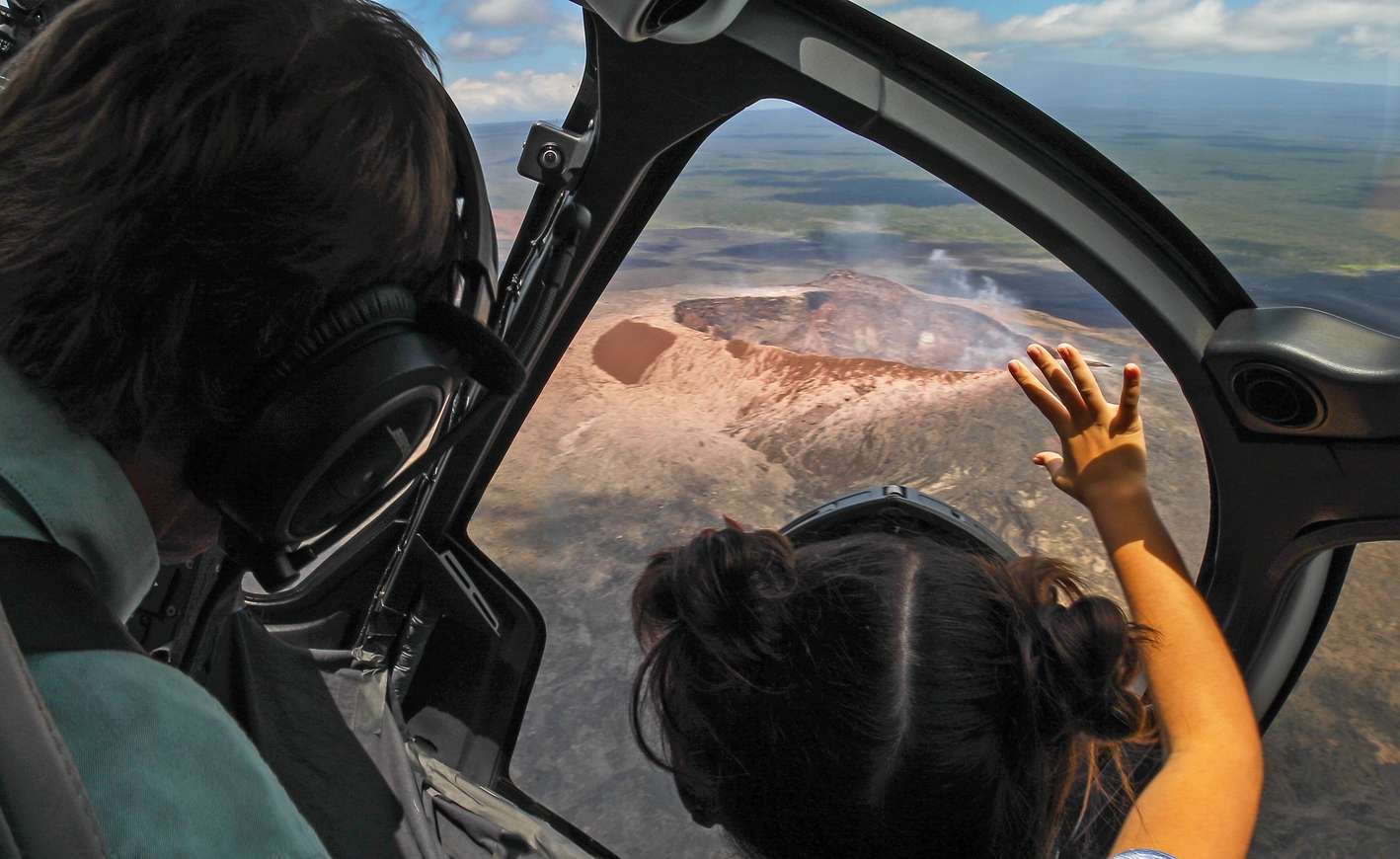
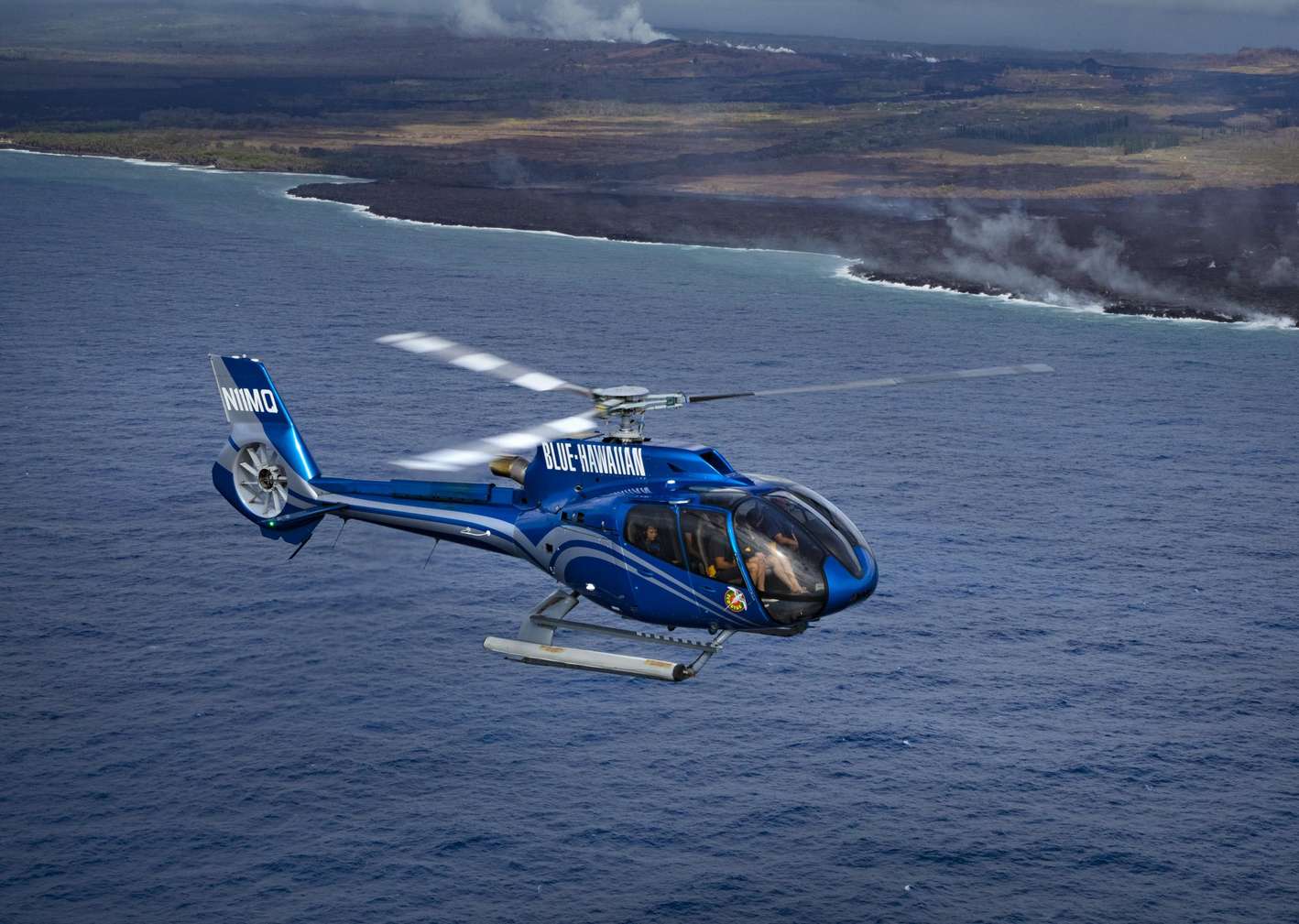
A one-hour flight straight from Hilo to the Kilauea caldera, with Mauna Kea and Mauna Loa in the distance and jungle waterfalls on the way back.
Soars over the Kilauea caldera and Puʻu ʻŌʻōDeparts Hilo, minutes from the volcanoSees Mauna Kea and Mauna Loa from above
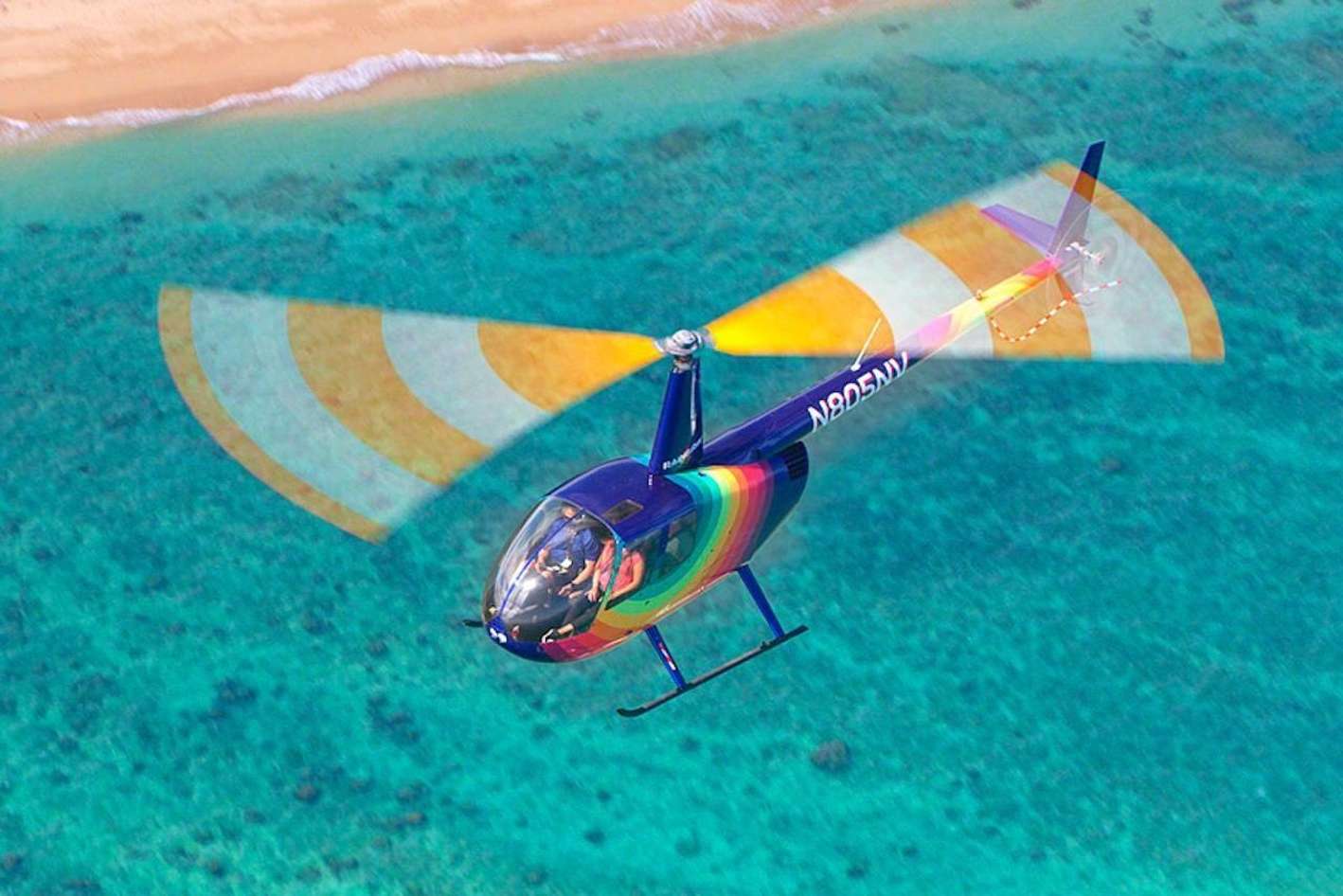
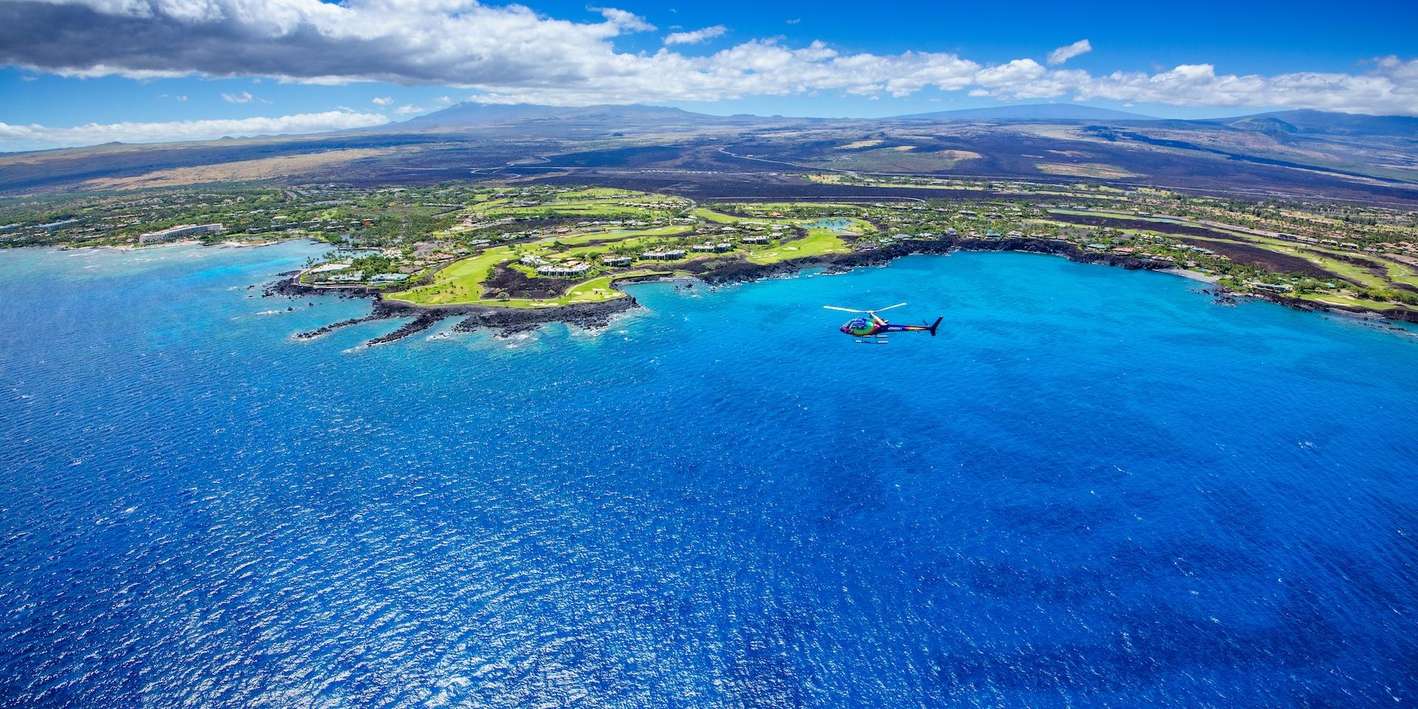
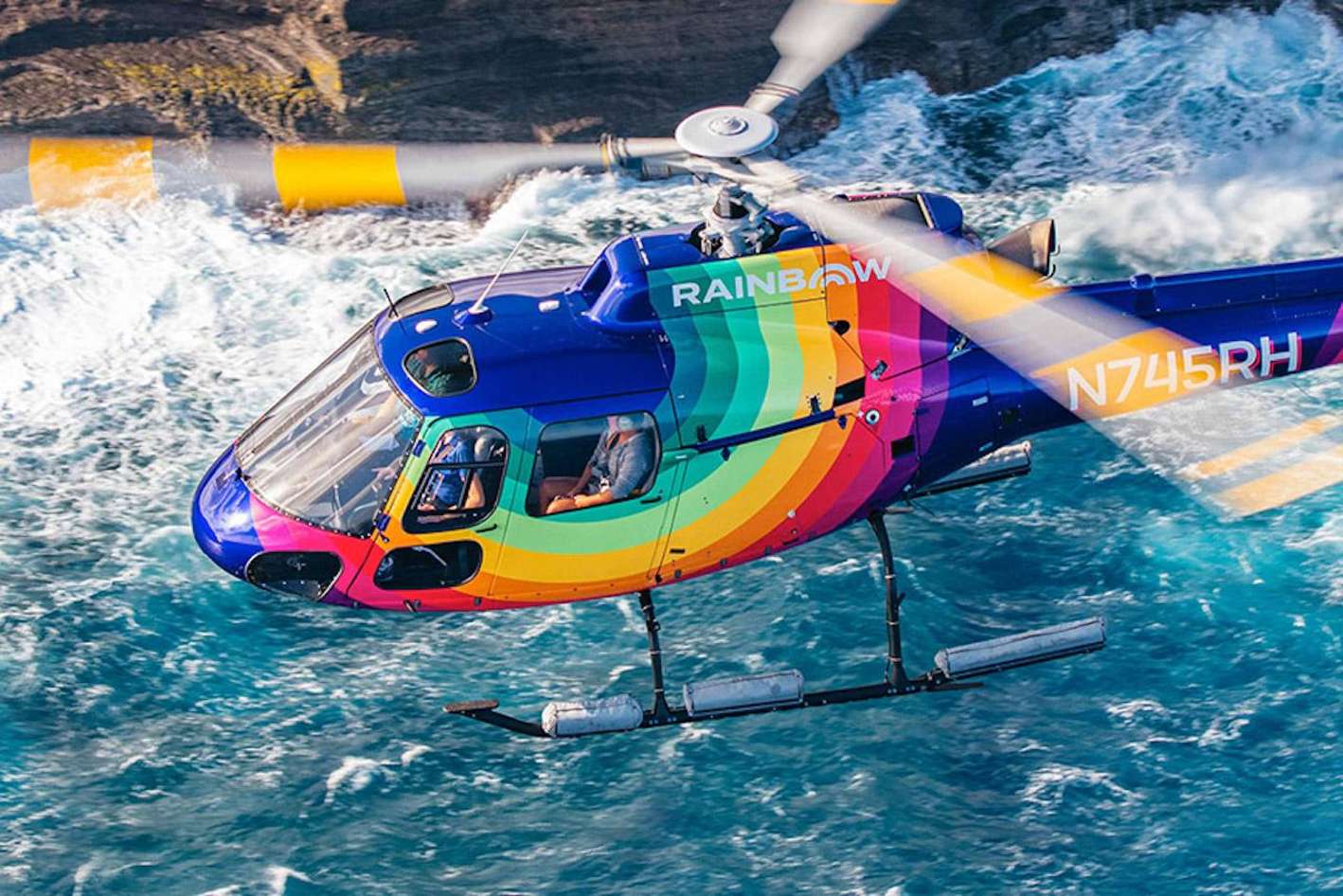
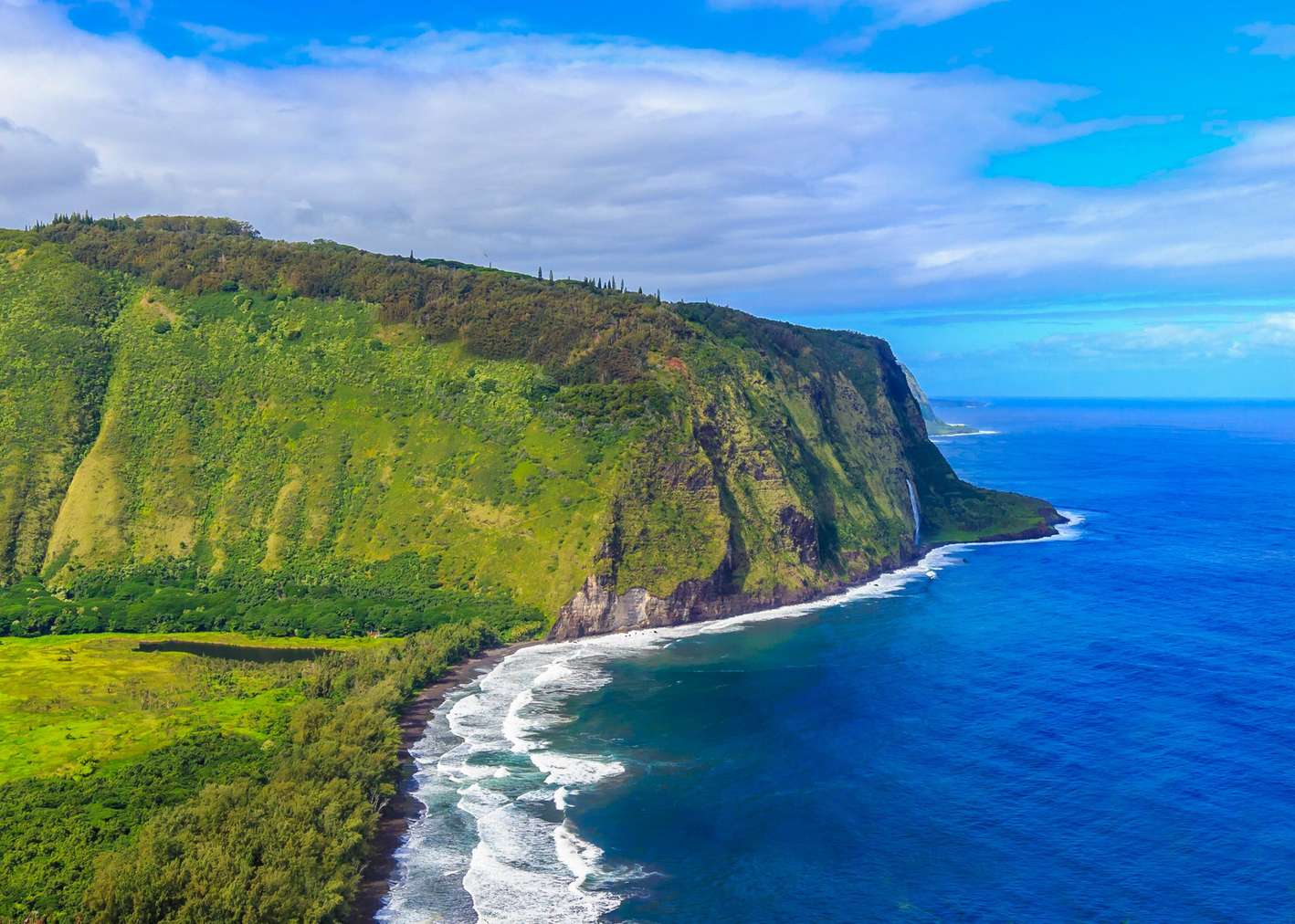
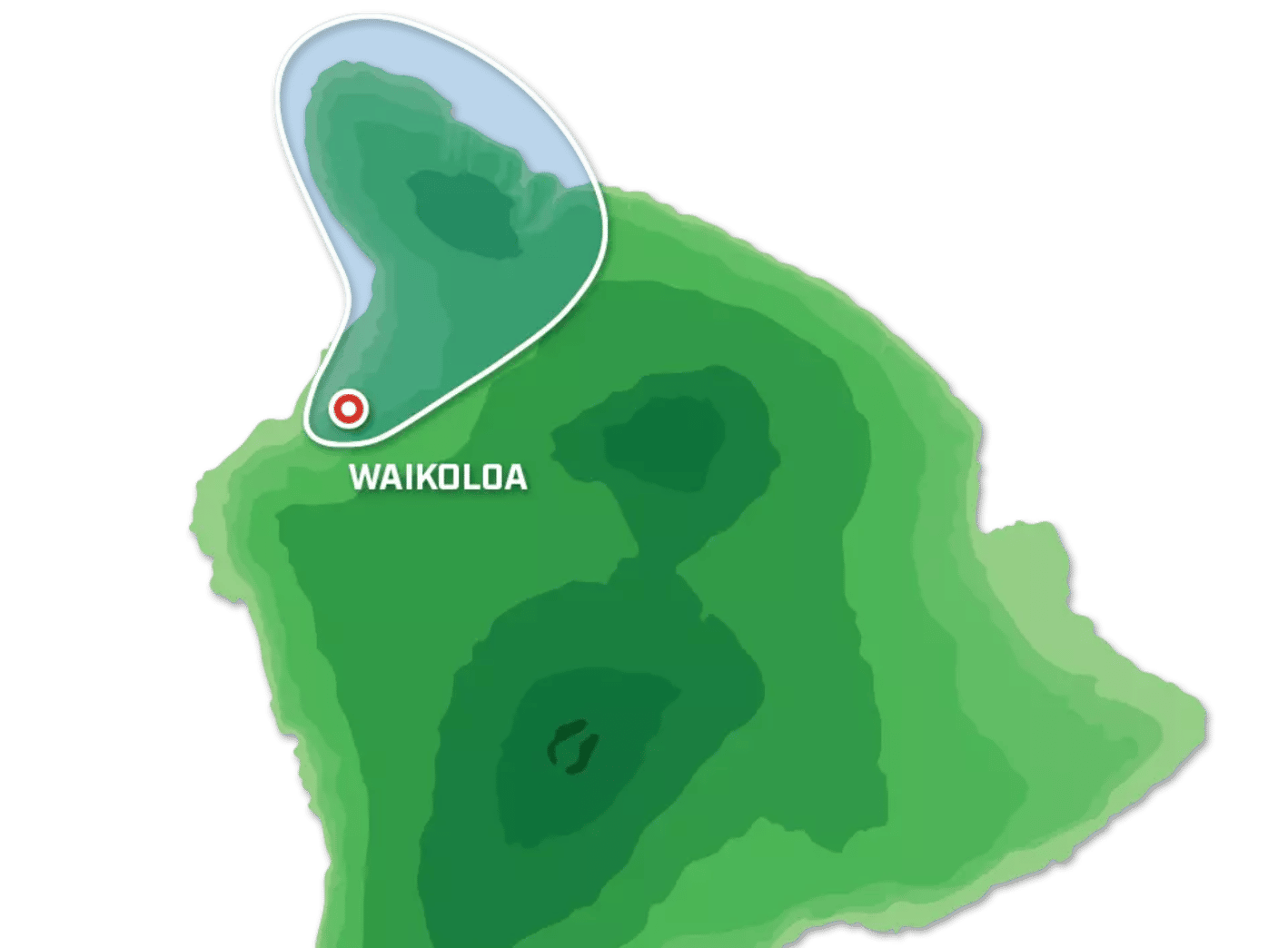
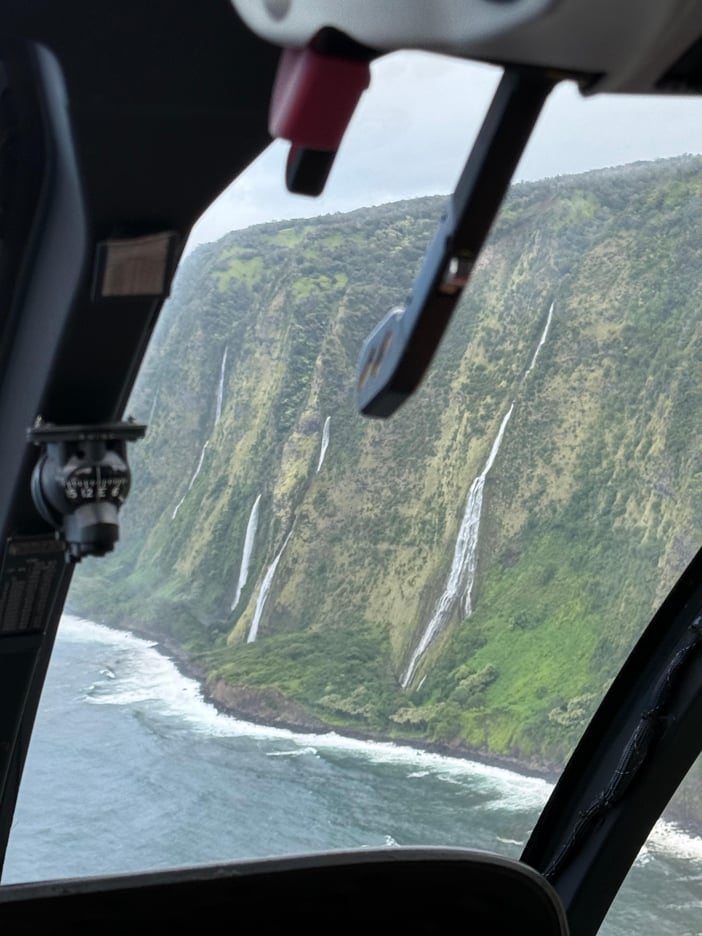
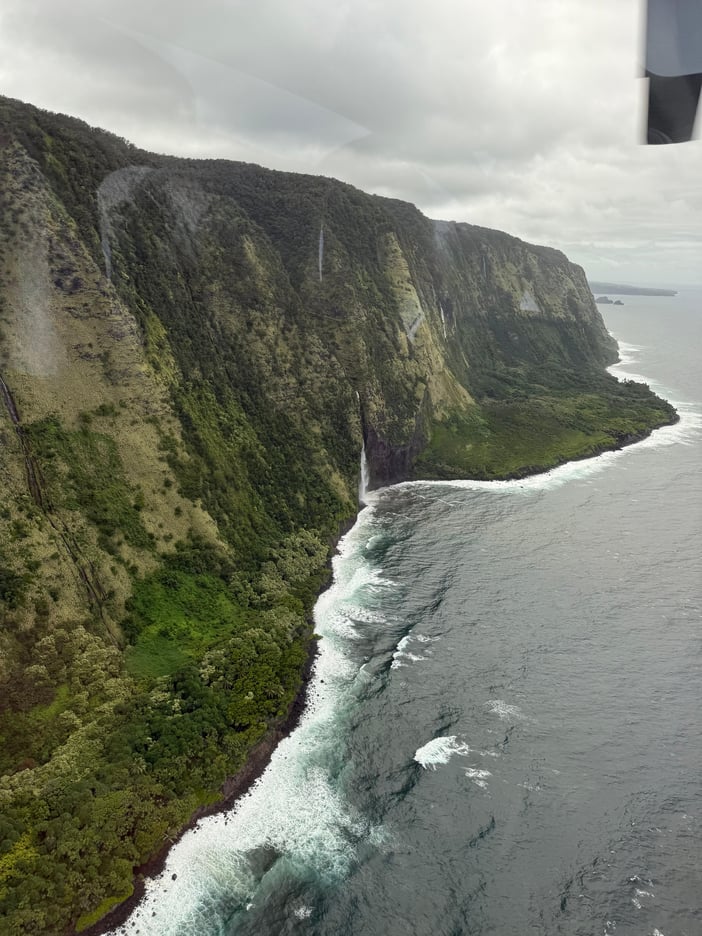
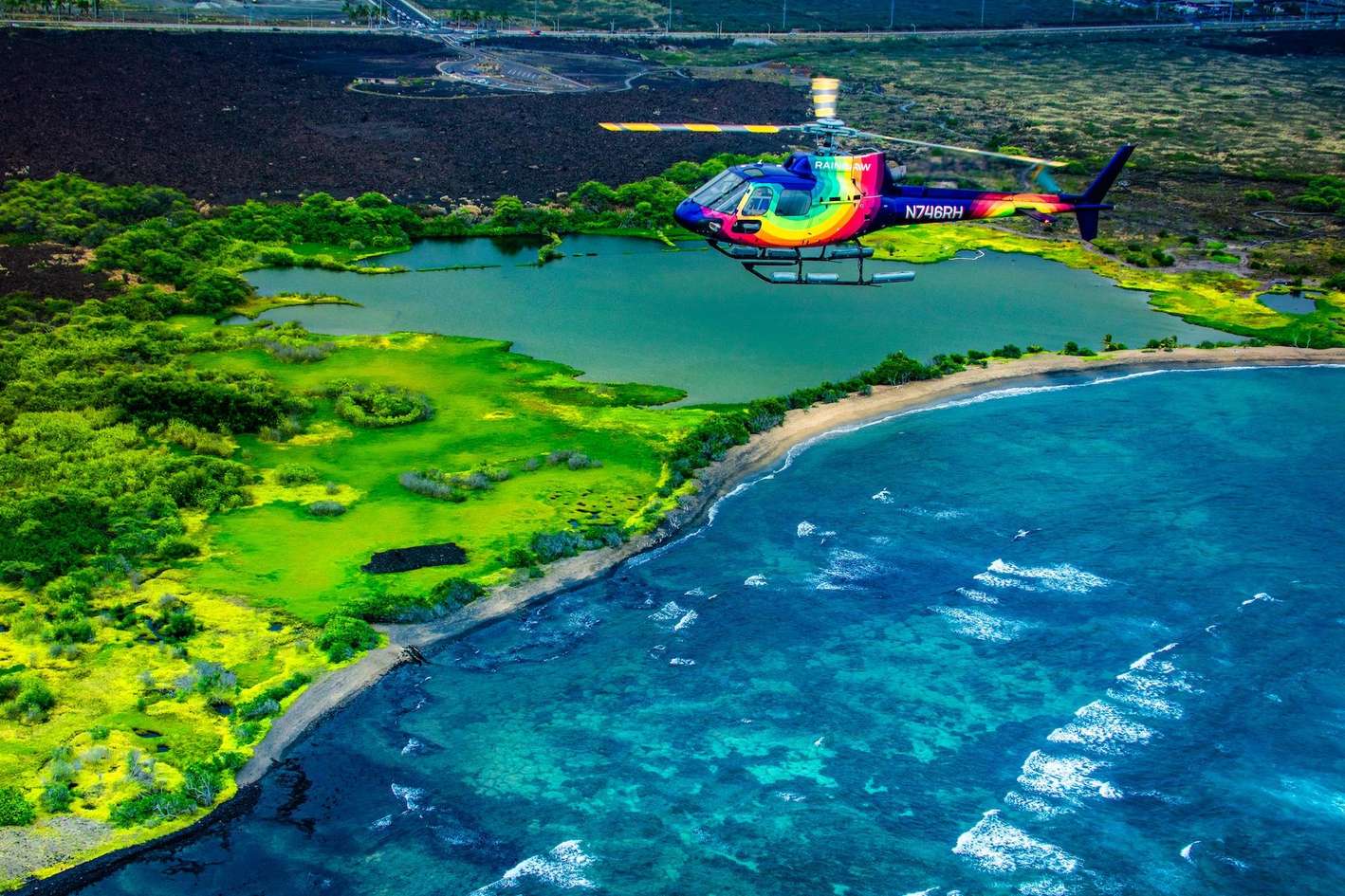
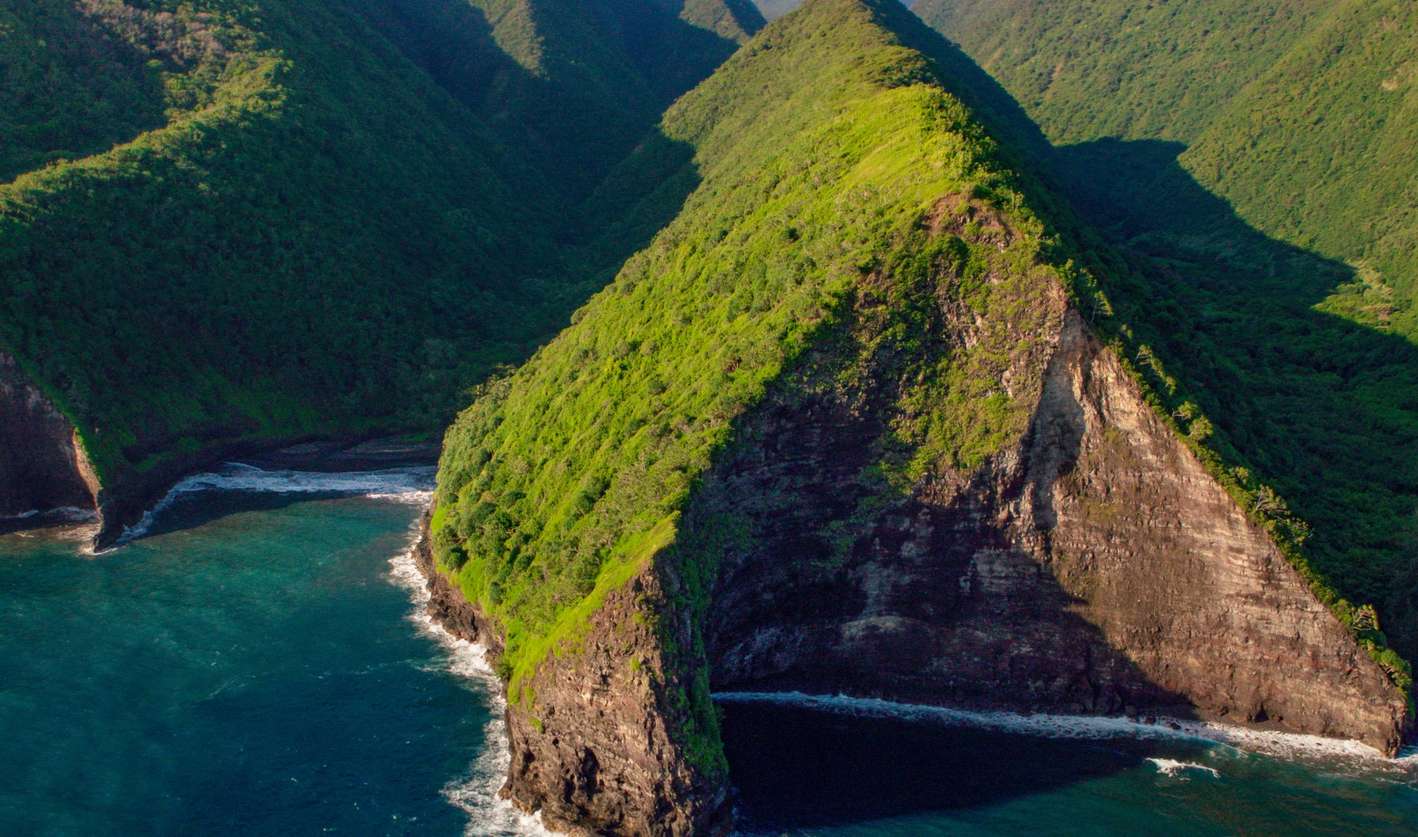
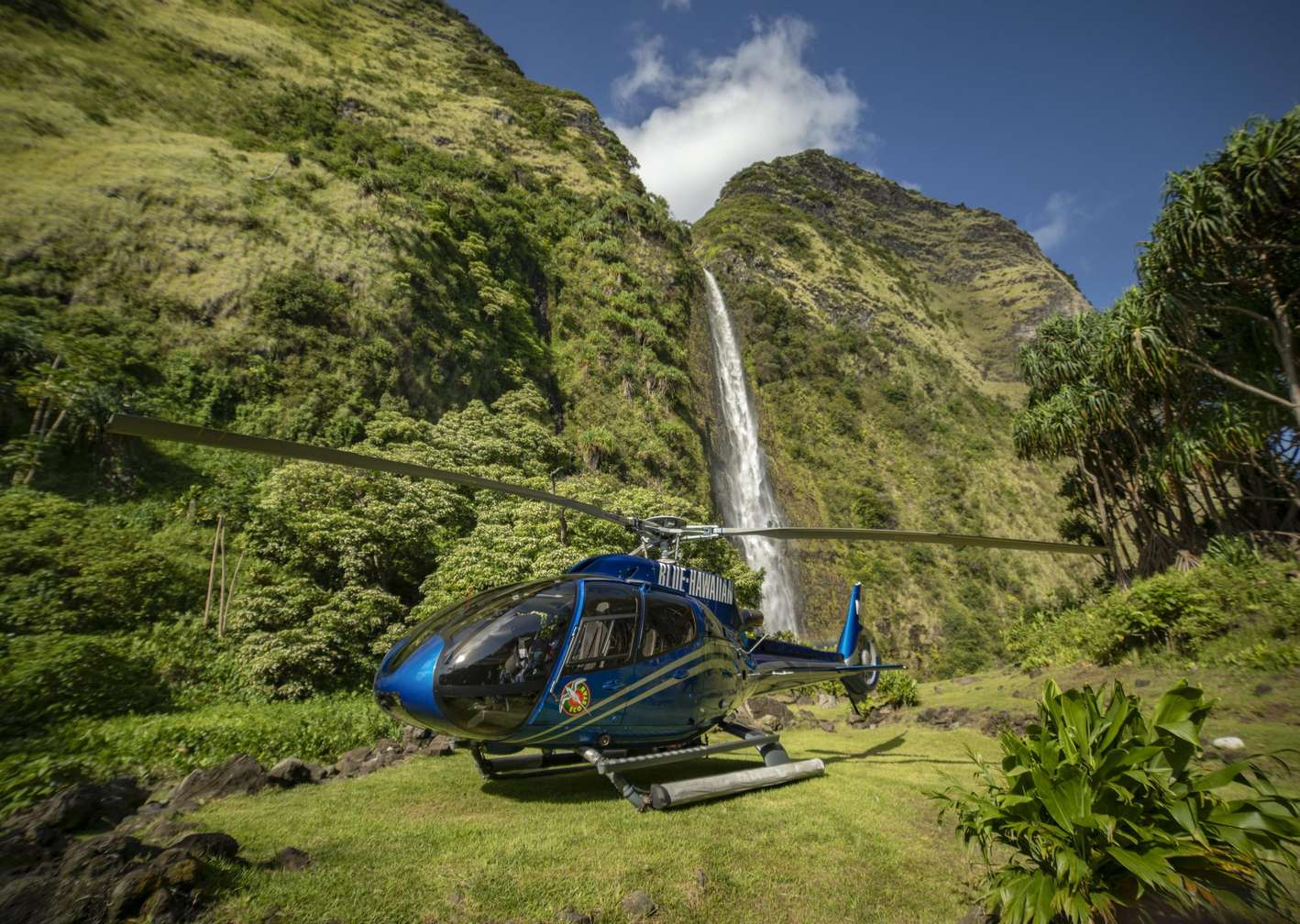
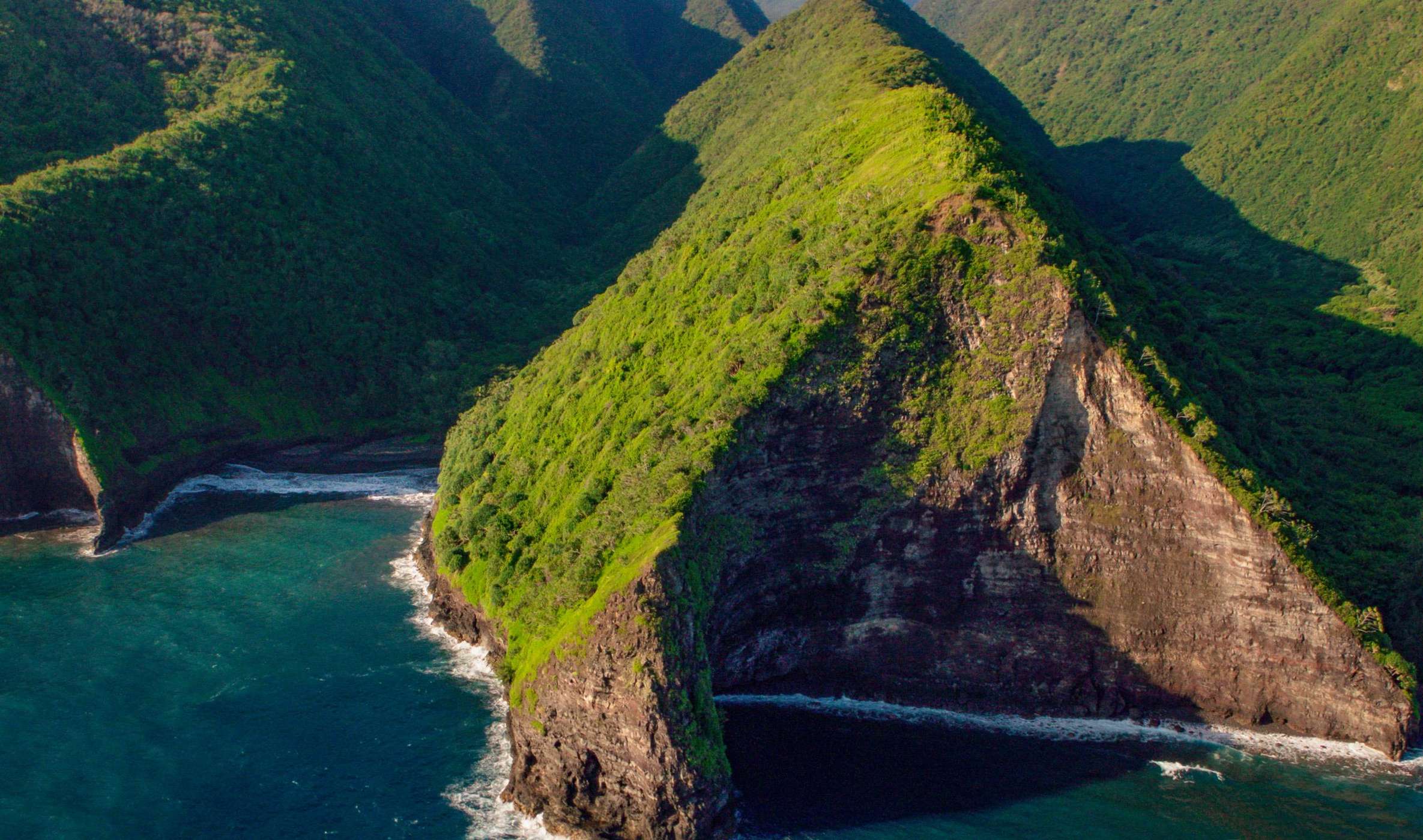
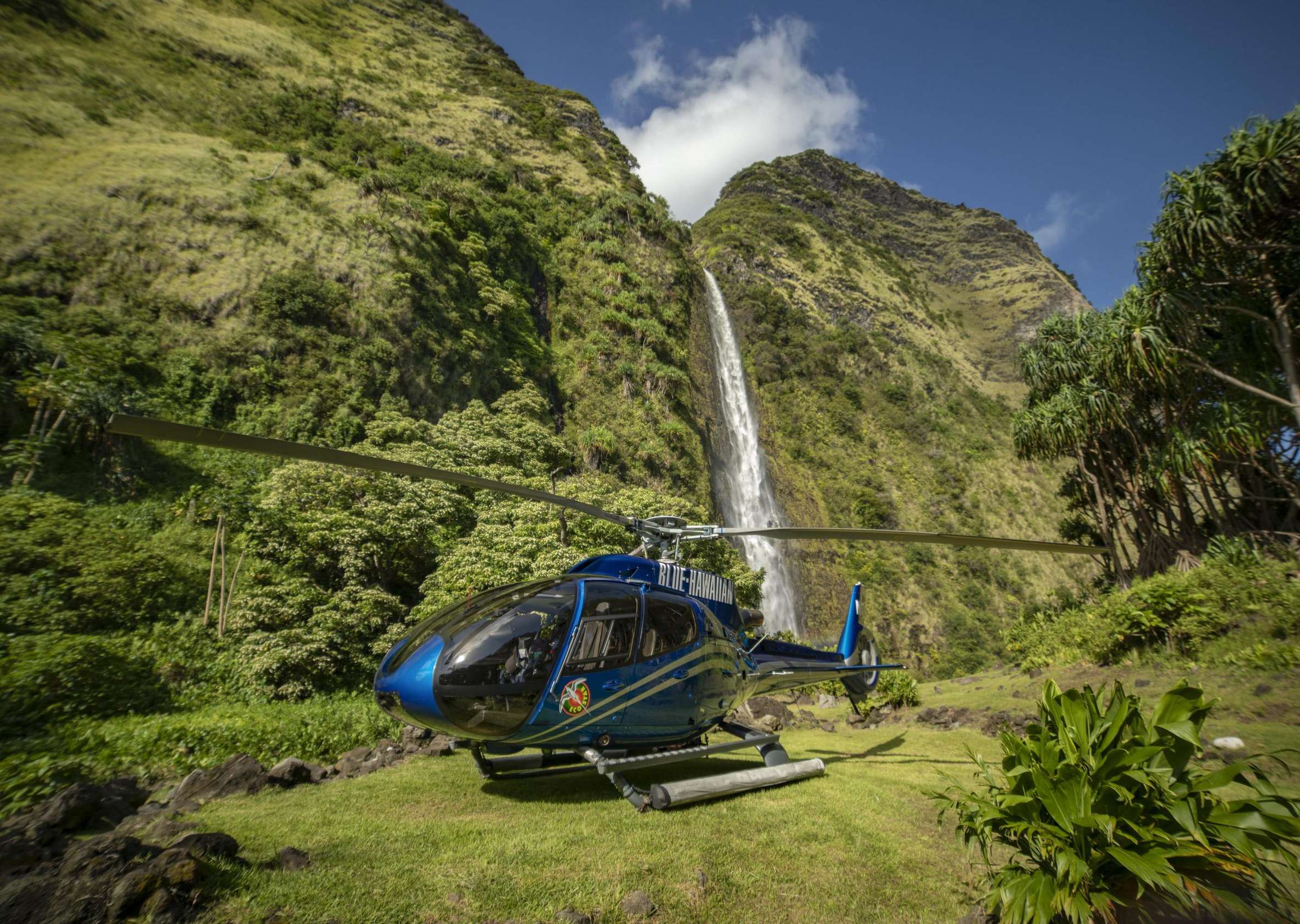
A 50-minute Eco-Star flight from Waikoloa over Waipiʻo sea cliffs and the deep Kohala valleys, with an optional waterfall landing that stretches it to 70 minutes.
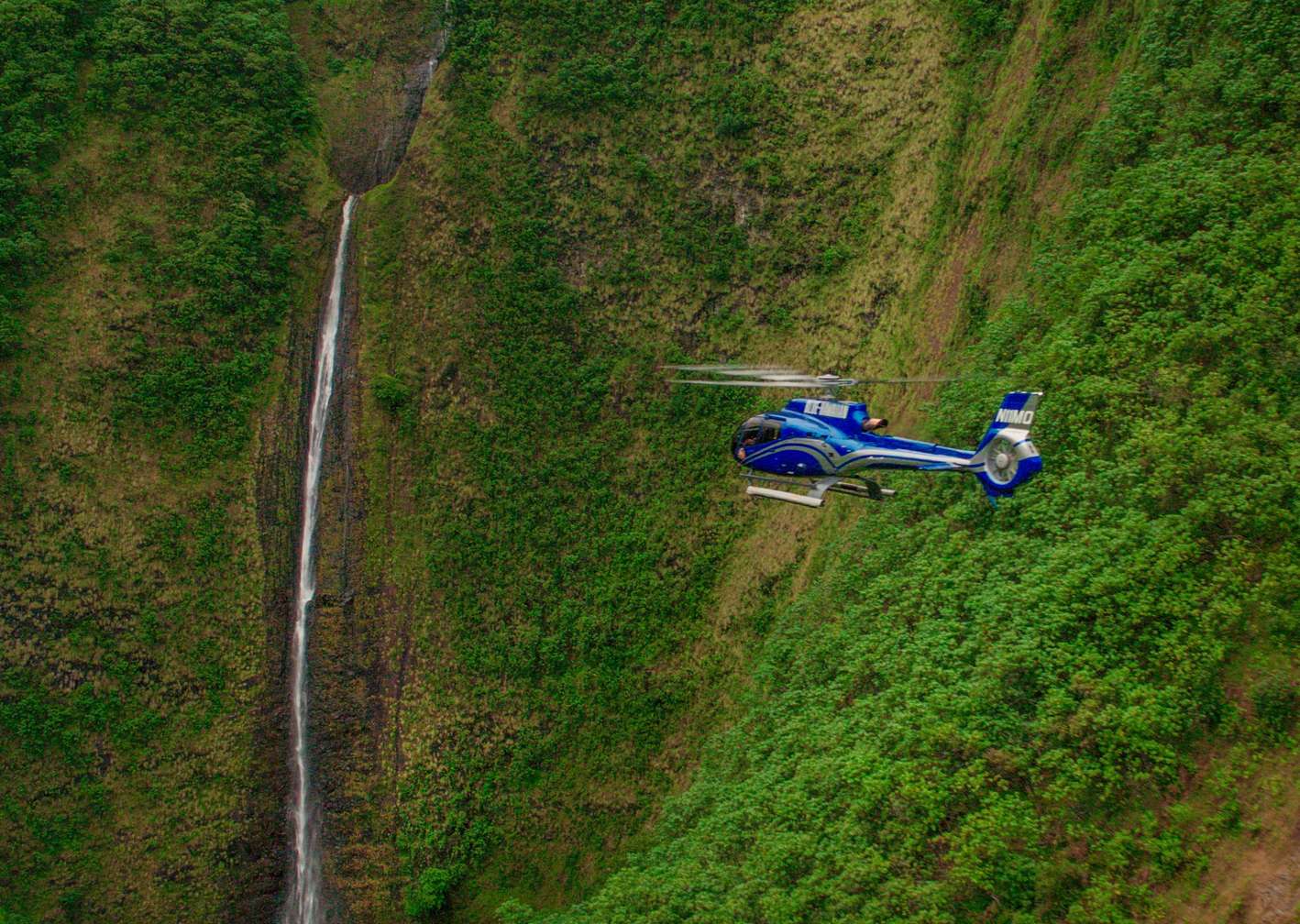
Deep valleys and sheer sea cliffs of KohalaNarrated by certified Hawaii guidesOptional landing beside a 1,200-foot cliff
The most complete route from Waikoloa: 105 minutes to two hours linking the volcano, the Hamakua rainforests, the Kohala valleys and an optional landing at Laupahoehoe Nui.
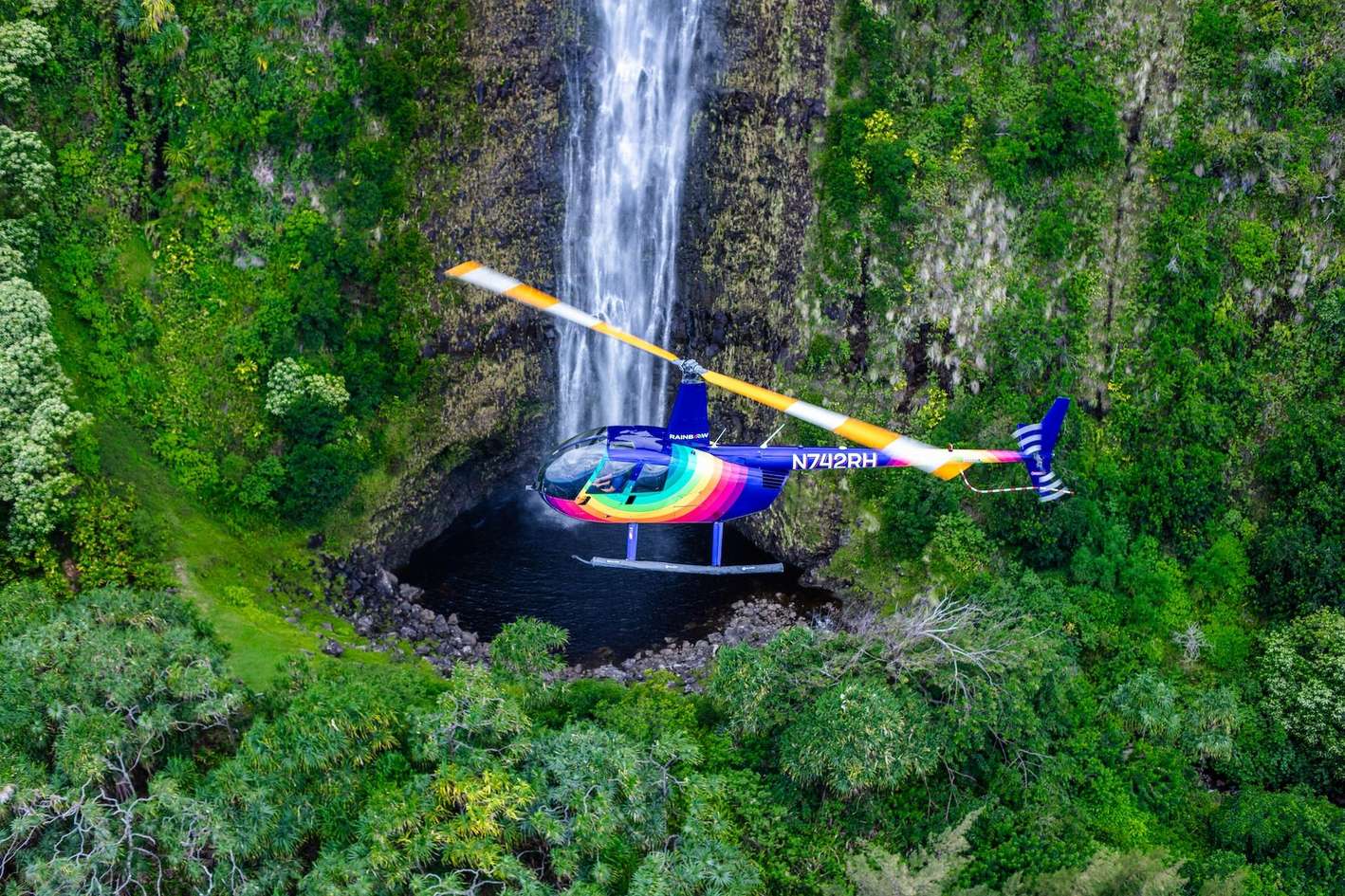
Covers volcano, rainforest and Kohala in oneOptional landing at the base of a 1,200-footRuns 105 minutes to two hours
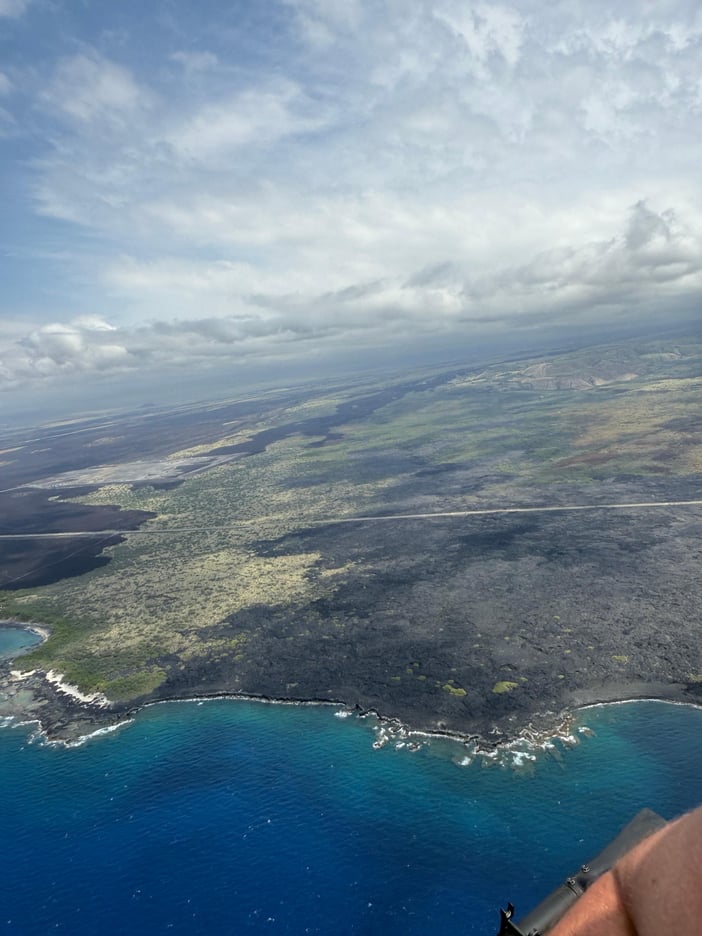
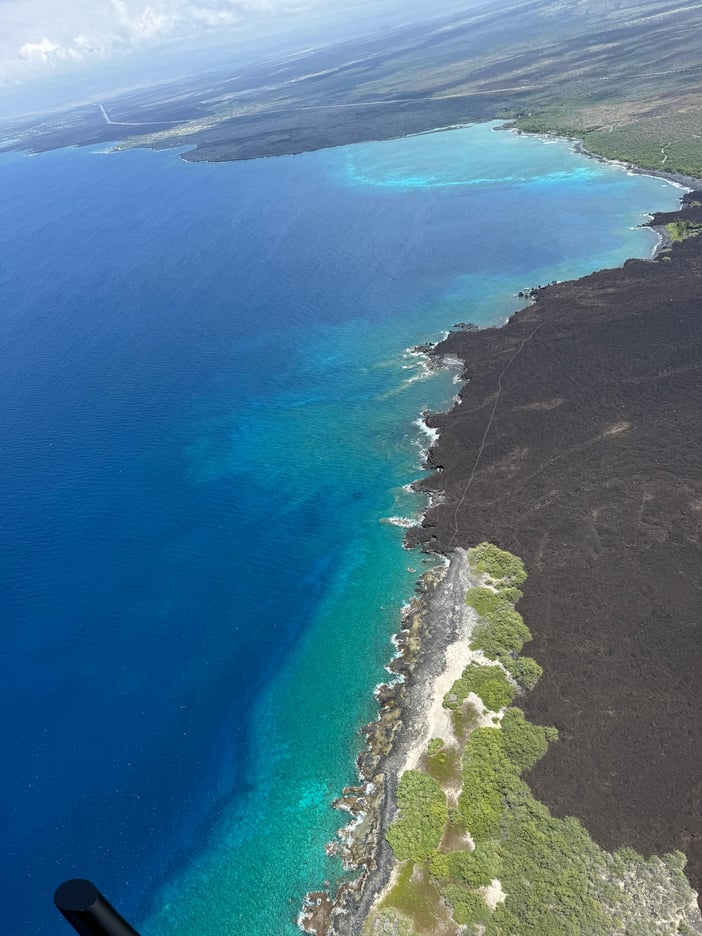
The Big Island Spectacular flight out of Waikoloa is the tour that covers the whole island in one go. In about 105 minutes you fly over Kilauea and the lava fields shaped by the 2018 eruption, cross to the rainforests of the Hamakua Coast, and finish in the deep valleys of the Kohala Mountains.
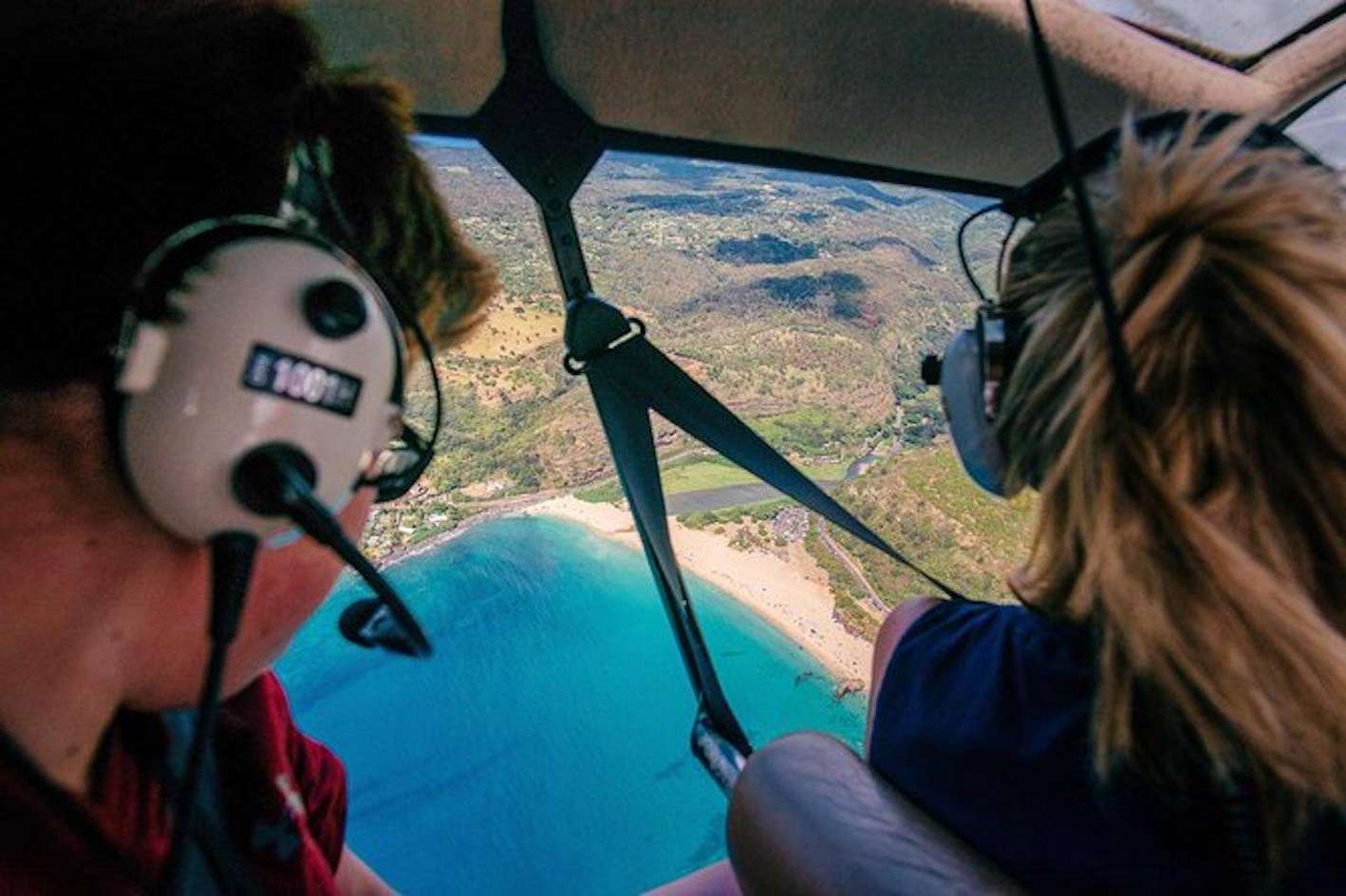
A pilot narrates the whole route through a headset, pointing out what you are crossing below. A longer version of the same flight adds a landing at Laupahoehoe Nui, a 1,200-foot waterfall, and runs two hours. The moments below walk through the flight in order.
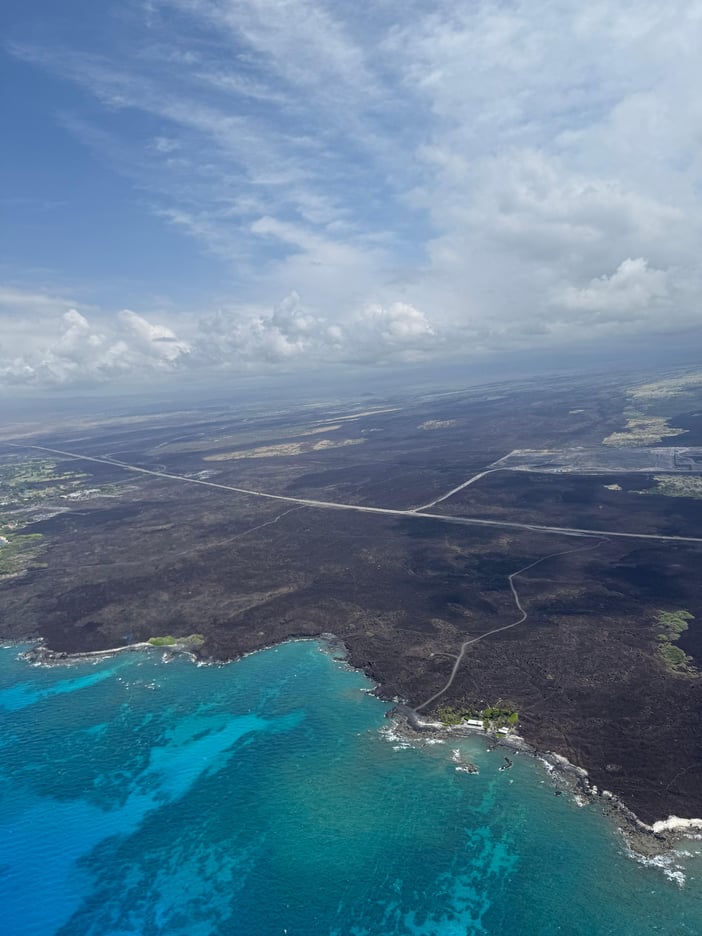
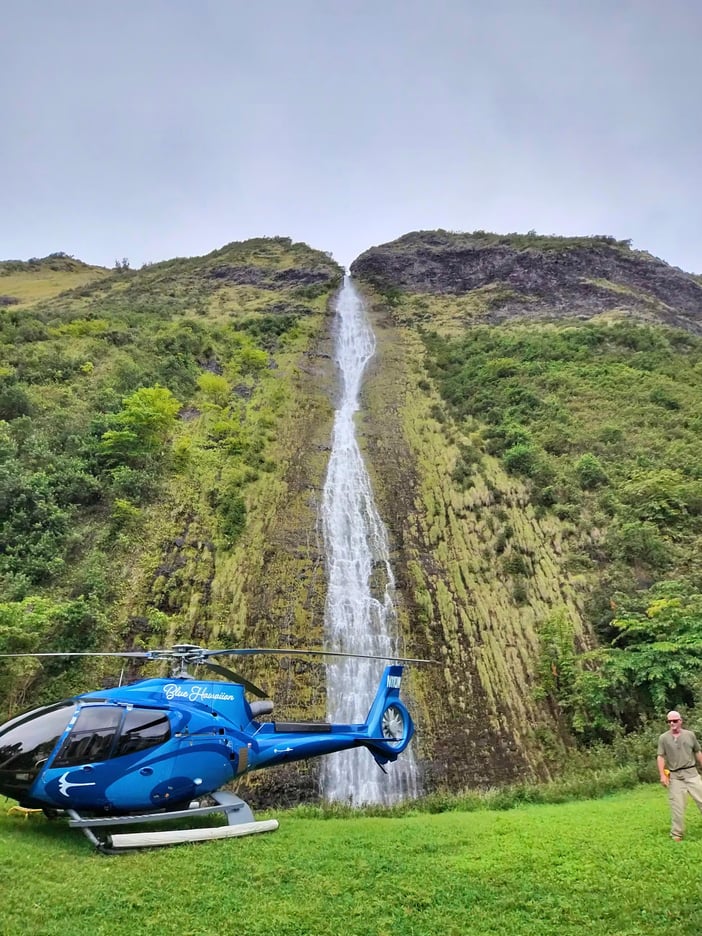
1Kilauea and the lava fields· about 25 minThe flight opens over Kilauea and the badlands left by the historic 2018 eruption, then crosses black sand beaches where lava once reached the sea.2The crossing to the east side· about 15 minFlying east, the dry west-side coast gives way to the windward slopes, where clouds and rain feed the green country ahead.3Hamakua Coast rainforest· about 25 minBelow you, thick rainforest canopy stretches along the coast, cut by waterfalls that drop into ravines no road reaches.4The Kohala valleys· about 40 minThe route winds through the meandering valleys of the Kohala Mountains, past sea cliffs that rise up to about 1,500 feet above the ocean.5Landing at Laupahoehoe Nui· about 15 minOn the longer option, the pilot descends beside the 1,200-foot waterfall and you step out onto a grassy pad before the flight back.
Where the other tours go
2220 Kekuanaoa StHawaii Volcanoes National ParkPu‘u ‘Ō‘ō, Hawaii
How to book a Big Island helicopter tour in five steps
01
Pick your date early in the trip
Book for your first or second morning on the island. Slots between 8 and 11 am fly in calmer air and clearer skies, and if weather cancels the flight you still have days to rebook.
Pro tipIn peak summer and the winter holidays, prime morning flights sell out two to three weeks ahead; doors-off seats and Saturdays go first
RecommendedAim for a morning departure, when the Kona slopes have not yet built their afternoon clouds
02
Choose doors on or doors off
Most tours sell both as separate options at the same departure. Doors-off flights need closed-toe shoes and secured phones, and those seats book out earliest.
Common mistakeAssuming every seat sits beside an open door; one operator warns your doors-off seat may or may not be next to one
03
Enter every traveler's true weight
Check-in includes a weigh-in, and seats are assigned by FAA weight-and-balance rules, so you cannot pick your own. Some tours require an adjacent empty seat for heavier guests.
ImportantArrange any required second seat with the operator after booking; it is not part of the original order
Common mistakeGuessing weights at booking, then getting moved or split up at the heliport
04
Pay, then watch for the email
The voucher and meeting point arrive by email after payment. Most of these tours have no hotel pickup, so plan your own drive to the Waikoloa or Hilo heliport.
ImportantBring a passport or ID card; check-in is 60 minutes before takeoff and late arrivals can lose the seat with no refund
05
On the day, dress for the cabin
Arrive an hour early for weigh-in and the safety briefing. Wear dark solid colors to cut window reflections, tie back long hair, and skip the scuba trip that morning.
Common mistakeDiving within 24 hours of the flight; the wait is mandatory and you will be turned away
Pro tipWear a light jacket even with doors on, since air at flight altitude runs 10 to 15 degrees cooler than the ground
Big Island helicopter tour reviews - what travelers said
Most reviewers praise their pilot as knowledgeable, explaining the volcanoes, geology and island history during the flight.
Best surprise
Several first-time flyers expected to be nervous and found the ride smooth, even spotting whales and hidden valleys.
Most common wish
Many reviewers wished weather had let them fly over the crater, and some wanted earlier warning of route changes.
The shortest Big Island helicopter tour to Kilauea
Where most flights start from the Kona side and cross the whole island, this one lifts off in Hilo, minutes from Hawaii Volcanoes National Park. In a single hour you circle the Kilauea caldera, pass the Puʻu ʻŌʻō cone and look out toward Mauna Kea and Mauna Loa.
It suits travelers whose priority is the volcano itself, with no long transit over dry lava plains eating up the hour.
All hour, no transitHilo sits right beside the park, so the one-hour flight goes straight to the caldera instead of crossing the island first.
Tried by hundredsMore than 270 travelers have rated this Hilo flight 4.2, and a pilot narrates the volcanic terrain as you fly.
Plans stay flexibleCancel up to 24 hours in advance for a full refund, so a weather day does not cost you the booking.
Peak-season morning slots sell out weeks ahead; free cancellation up to 24 hours lets you hold a date now.
What to know before you book a Big Island helicopter tour
Can stop the dayGood to knowGood news
01
ChoosingWhat it is, who it suits, when to go
4
Lava odds
Molten red lava appears only when Kilauea is actively erupting, and eruptions pause and shift without notice. When the volcano is quiet, you will see steam vents, crater formations and hardened flows from past eruptions, which many travelers still find dramatic from the air.
Timing
Morning flights between about 8 and 11 am give you the calmest air and clearest skies over the volcanic summits and the Kohala valleys. Clouds build over the slopes as the day warms, and trade winds can make afternoon rides bumpier. On the Hilo side, late morning near 11 am is often a sweet spot past the early rainfall.
Motion sickness
Helicopter flights are generally smooth, and many travelers who get queasy in cars or boats feel fine in the air. If banking turns usually bother you, take ginger chews or your medication before boarding, since it works best ahead of the flight rather than after symptoms start.
Tipping
Tipping the pilot when you land is optional but common. Most people leave a modest amount, on the order of a set sum per couple or per solo traveler, and the ground crew shares whatever is left at the desk.
02
BookingHow far ahead, and what happens if plans change
1
Cancellation
If weather grounds the flight, operators offer a reschedule or a full refund with no penalty, and cancellation windows are usually 24 hours to two days. This is one reason to book your flight early in the trip, so buffer days remain if you need to move it.
03
Before you goPapers, health, what to bring
2
Weather reroutes
Low cloud, rain and volcanic vog can obscure the summits, and pilots then steer toward other sights along the windward coast. Older lava fields and rainforest waterfalls often make fine substitutes, and the waterfalls can flow harder after a passing shower.
What to wear
Wear solid dark clothing, since bright colors can reflect in the windows and show up in your photos. Closed-toe shoes are the rule on open-door flights, with a warm layer because the air at altitude runs 10 to 15 degrees cooler than on the ground.
04
On the dayWhere to be, when, and how you get there
3
Check-in time
Plan to arrive at the heliport well before takeoff. Some operators ask you there a full hour ahead, and a late arrival can mean losing your seat with no refund. The weigh-in and safety briefing take that time.
Check-in time
Plan to arrive at the heliport well before takeoff. Some operators ask you there a full hour ahead, and a late arrival can mean losing your seat with no refund. The weigh-in and safety briefing take that time.
Check-in time
Plan to arrive at the heliport well before takeoff. Some operators ask you there a full hour ahead, and a late arrival can mean losing your seat with no refund. The weigh-in and safety briefing take that time.
05
During the tourWhat is expected of you
2
Seating
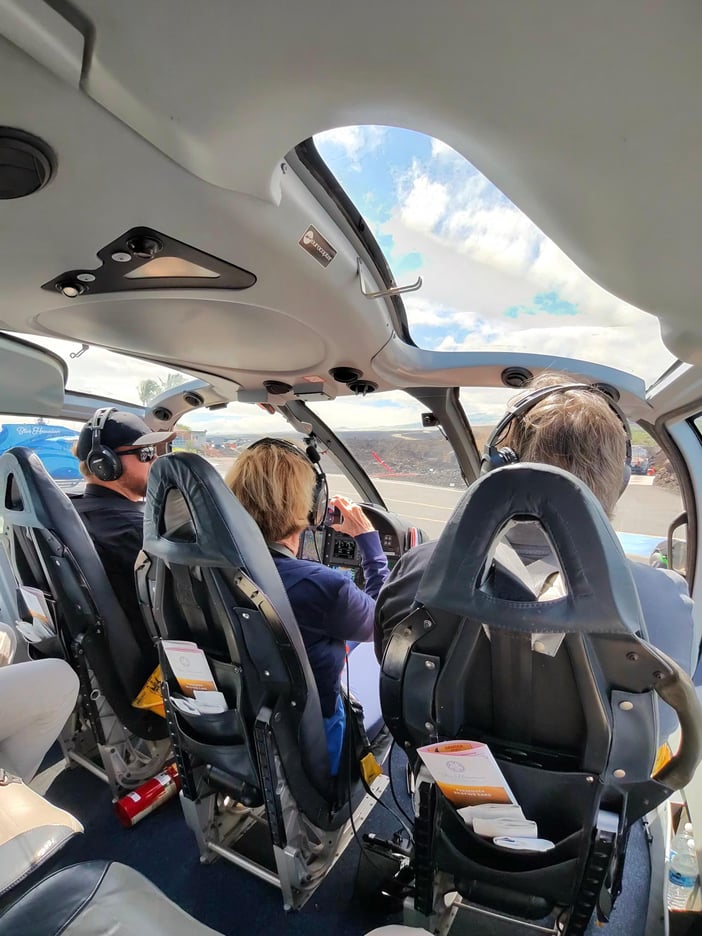
You do not pick your own seat. Operators assign seats by passenger weight to balance the aircraft, as federal rules require, so a couple or family cannot be guaranteed seats together. Smaller four-seat aircraft give everyone a window view; larger six-seat touring helicopters have middle rear seats where views can be partly blocked.
Loose itemsCan stop the day
On doors-off flights, nothing loose can ride in the cabin. Hats, bags, scarves, water bottles, selfie sticks and spare lenses get stowed or left behind, and any phone or camera must be tethered with a wrist or neck strap. Operators provide straps and cases, and long hair needs to be tied back.
A traveler's guide to helicopter rides over the Big Island
A helicopter flight is the biggest single-ticket decision on a Big Island trip, and the one most visitors book blind. What the airtime buys, where to fly from, what to wear and what happens when the weather turns: all settled here.
If you only remember three things
1
Book a morning slot between 8 and 11 am, when the air is calmest and the skies clearest on both coasts.
2
Book the flight for your first or second morning, so weather cancellations leave days to reschedule.
3
Arrive 60 minutes before takeoff for weigh-in and the safety briefing, and leave every loose item stowed.
Is a Big Island helicopter flight worth the money?
The honest case starts with what no rental car can reach. The Hamakua sea cliffs, the deep Kohala valleys and the crater country around Kilauea sit behind miles of roadless terrain, and from a helicopter you see them all in an afternoon.
Kauai flights sell the Na Pali cliffs and Waimea Canyon. Maui sells variety. This island sells geology: craters, black lava fields, steam vents and rainforest waterfalls in one route. If you have already flown on another island, a volcano flight here adds something those routes simply do not carry.
Two honest caveats. When Kilauea is quiet, some visitors find long stretches of hardened black lava repetitive, and the Kohala valleys then steal the show. And an airplane tour costs roughly half, flying higher with panoramic windows, but it cannot hover at a crater rim or hang beside a waterfall.
A traveler's note
What an exciting adventure! Our pilot Justin explained every place and its history. The views were unreal - couldn't reach the volcano due to clouds, but the coastline's colors made it totally worth it.
That first-hand reaction is the common one. Weigh the ticket against your other days, and if volcanic or roadless country is why you came, the flight earns its place.
Tour for this
Waikoloa: Big Island Spectacular Helicopter Tour4.2★ (10) · 105 minutes - 2 hours · Free cancellation
A full circle-island flight covers all five volcanic mountains: Mauna Loa, Kilauea, Hualalai, Mauna Kea and Kohala, and can cross up to 11 of Earth's 13 climate zones in under two hours.
The route runs from arid coastal desert to windward rainforest, past South Point and Papakolea Green Sand Beach, then north along the Hamakua Coast.
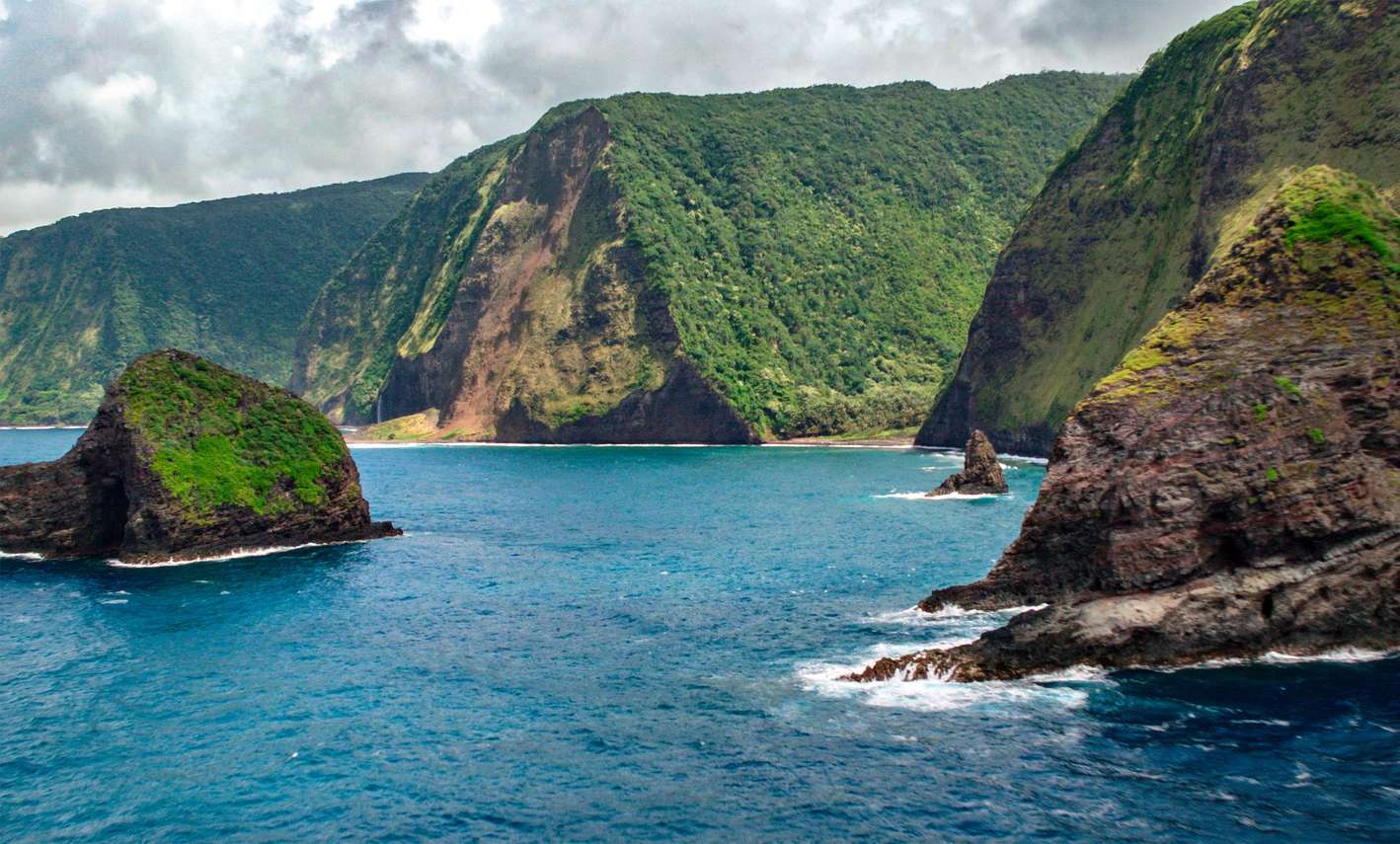
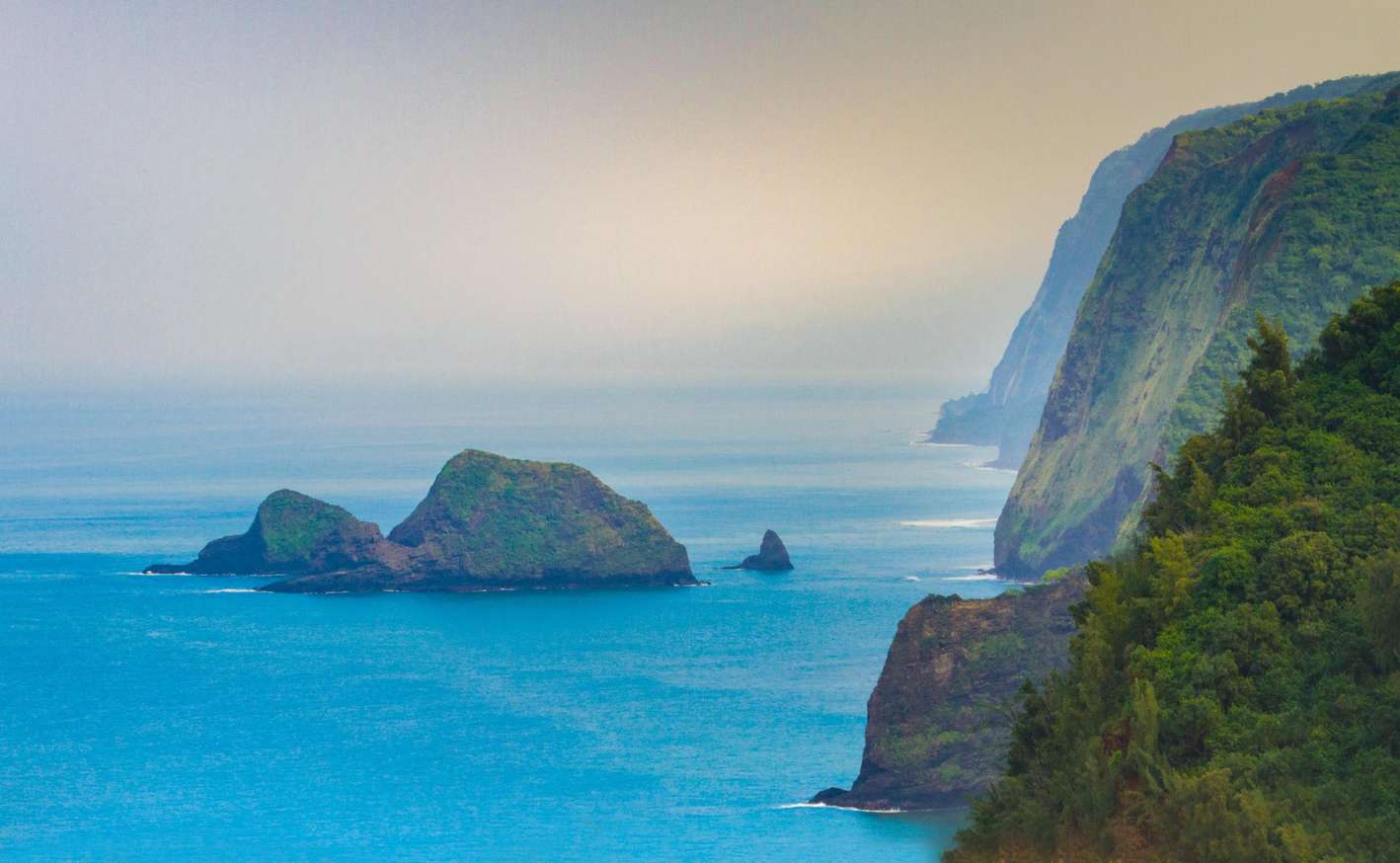
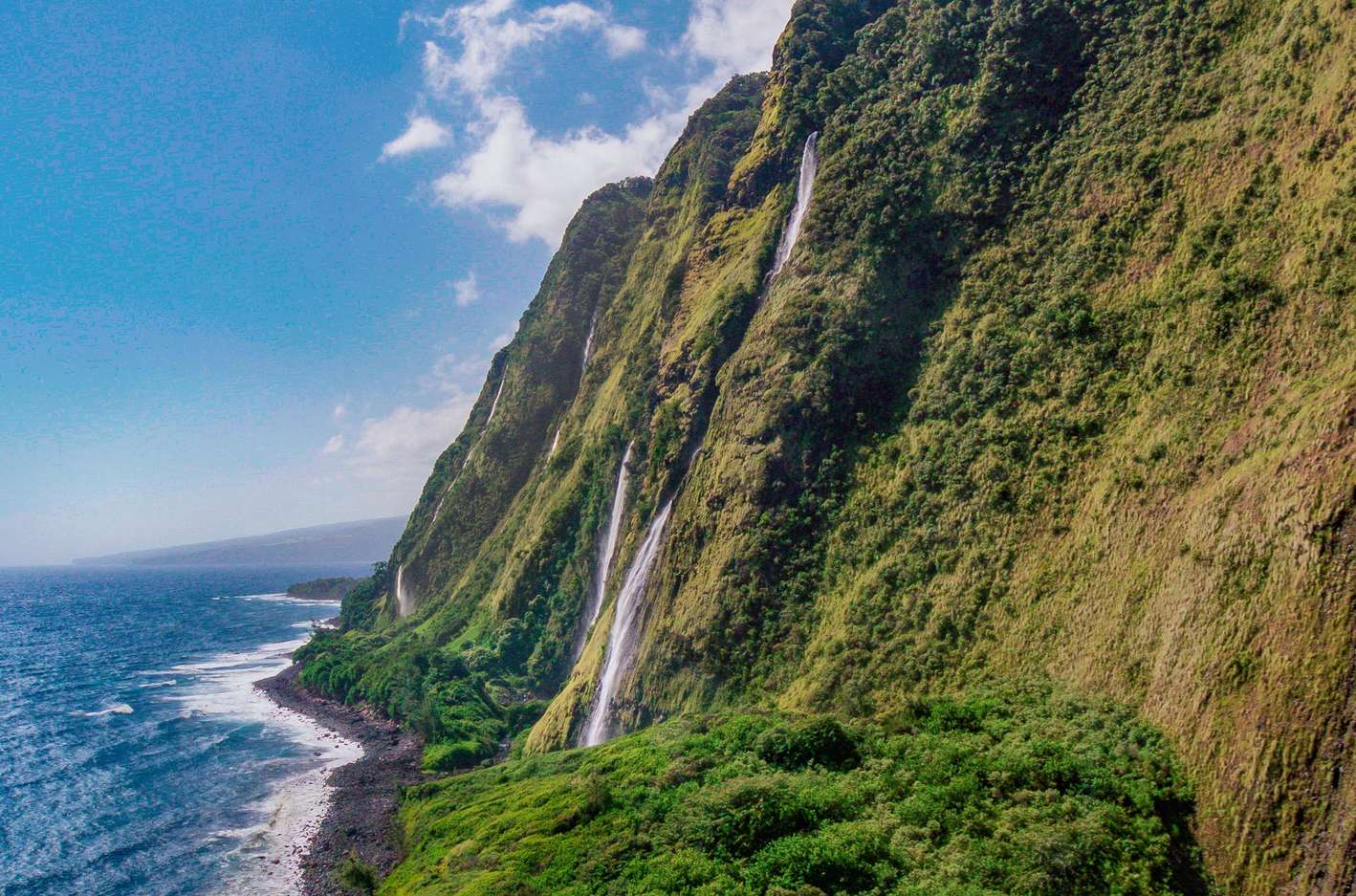
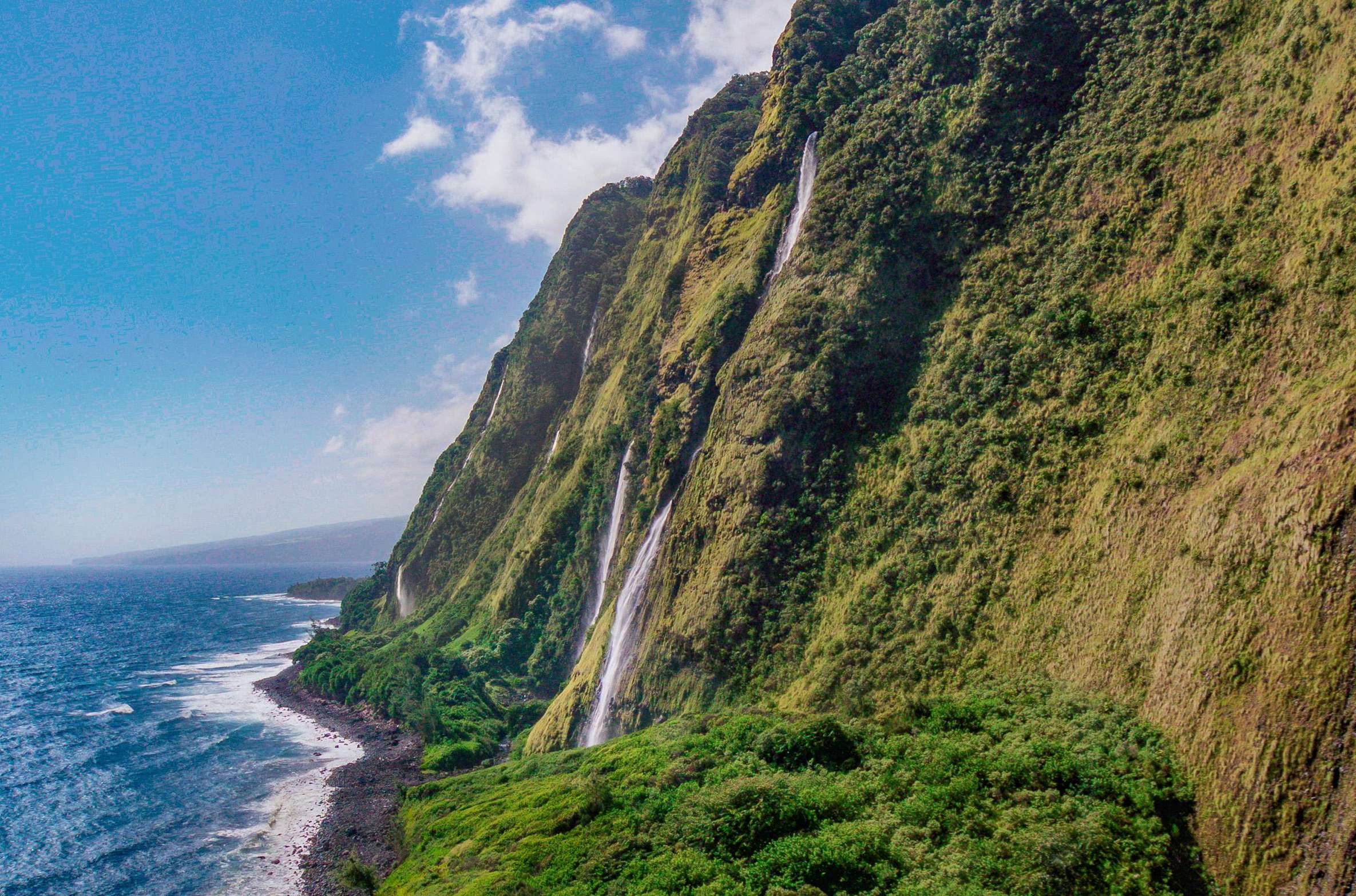
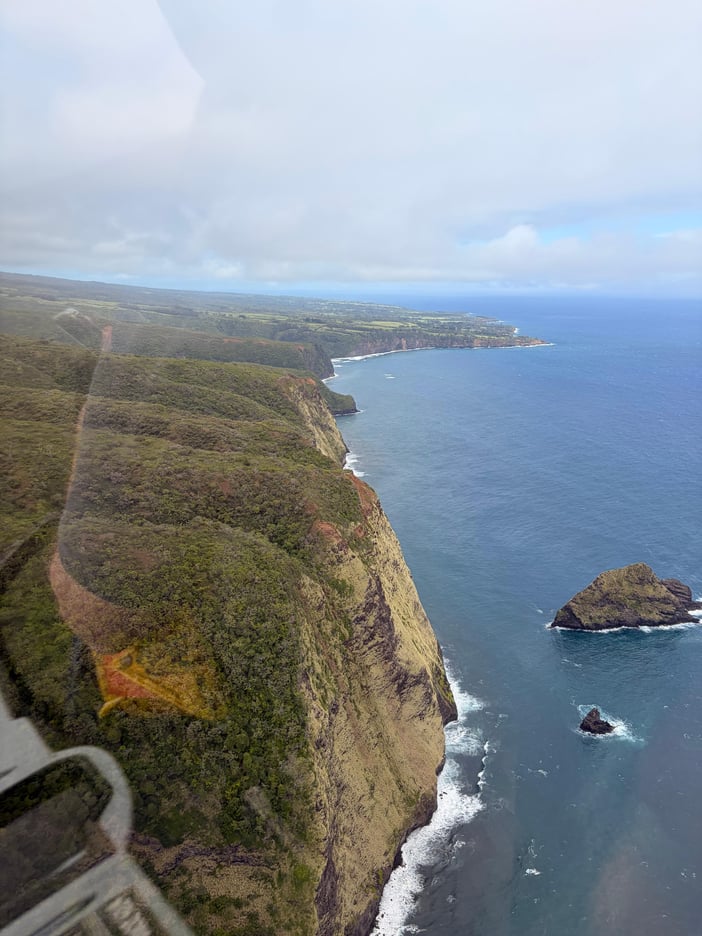
The north is where the ground never reaches. Kohala's sea cliffs rise 400 to 1,500 feet straight from the ocean, and the valleys behind them, Waipio, Waimanu and Pololu, hold waterfalls that drop through green country no trail touches. Long flights either run a full two hours or land midway in Hilo to refuel.
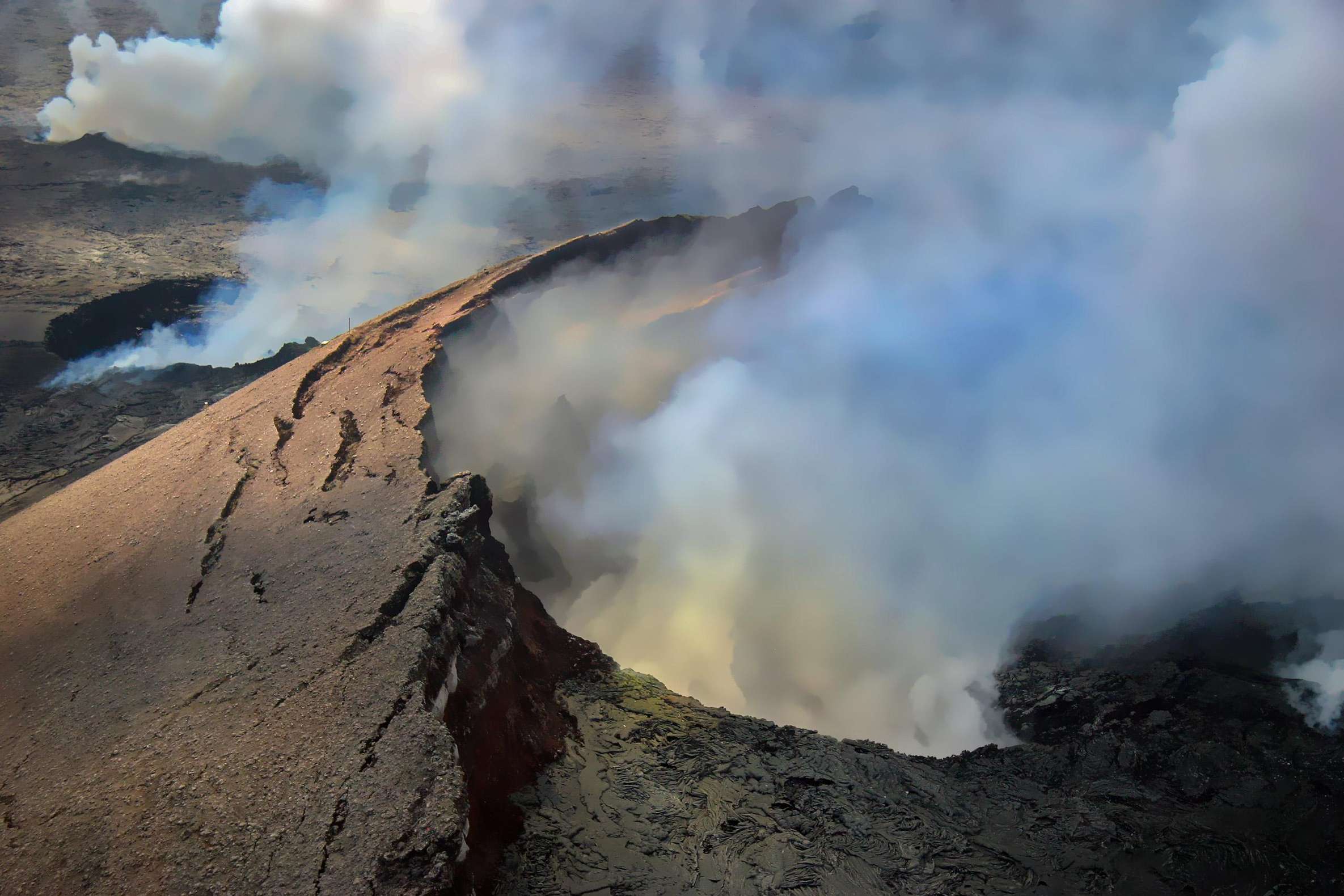
Over Kilauea caldera, the details reward a slow circle: crater walls, fissures, lava channels, sulfur staining the floor, and the vent complex at Halemaumau. This hovering is the helicopter's edge over an airplane, which must keep moving at higher altitude.
Why the helicopter beats the airplane here
Helicopters hover and rotate, so both sides of the cabin photograph the same crater rim
Airplanes fly higher and never stop over the good stuff
Helicopters fly lower, closer to waterfall faces and crater rims
The angle into an open crater side is one an airplane cannot take
Smaller doors-off aircraft linger longer over key scenery
Larger touring helicopters move faster between sights
The tour that does all of this in one run is the Waikoloa: Big Island Spectacular Helicopter Tour, about 105 minutes to two hours from the west side, linking an active volcano, the Hamakua rainforests and the Kohala mountains in a single route. Headsets and a pilot guide come with it.
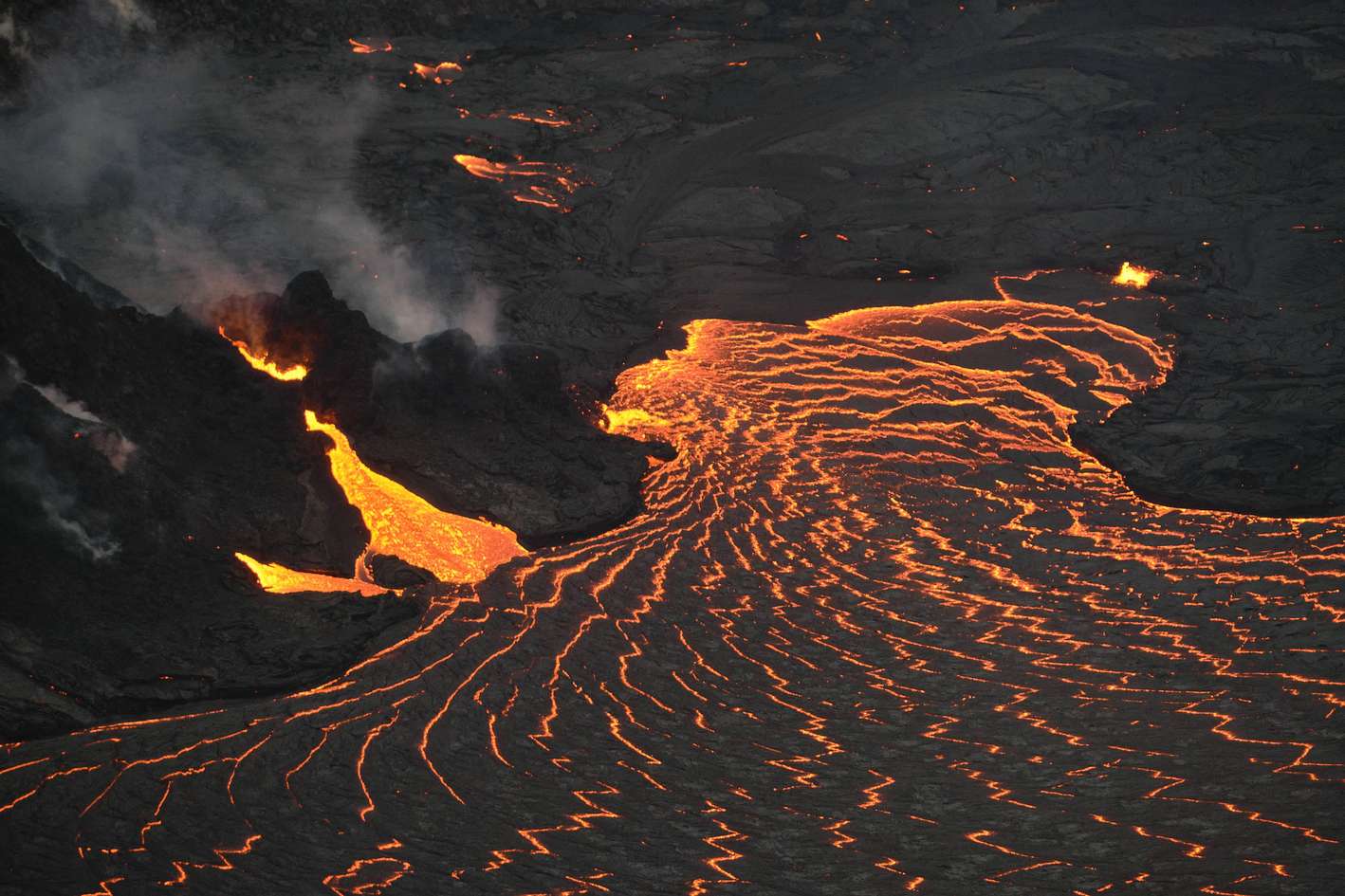
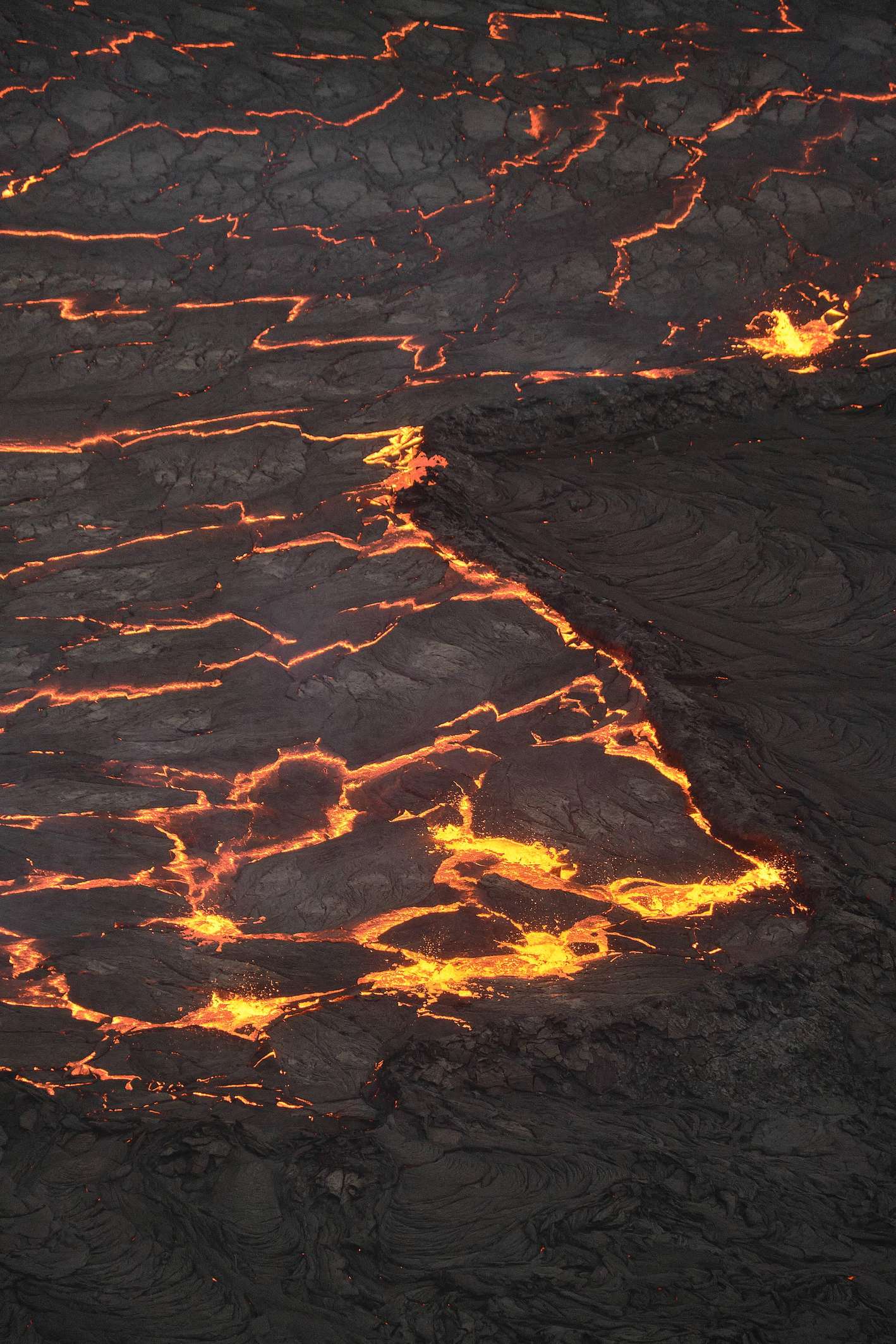
Here is the hope and the fear in one sentence: red lava is never guaranteed. Kilauea erupts in brief, intermittent windows that pause between episodes. As of mid-October 2026, an eruption episode had just stopped, leaving no active lava at the summit, though previously erupted ground can still glow faintly at night.
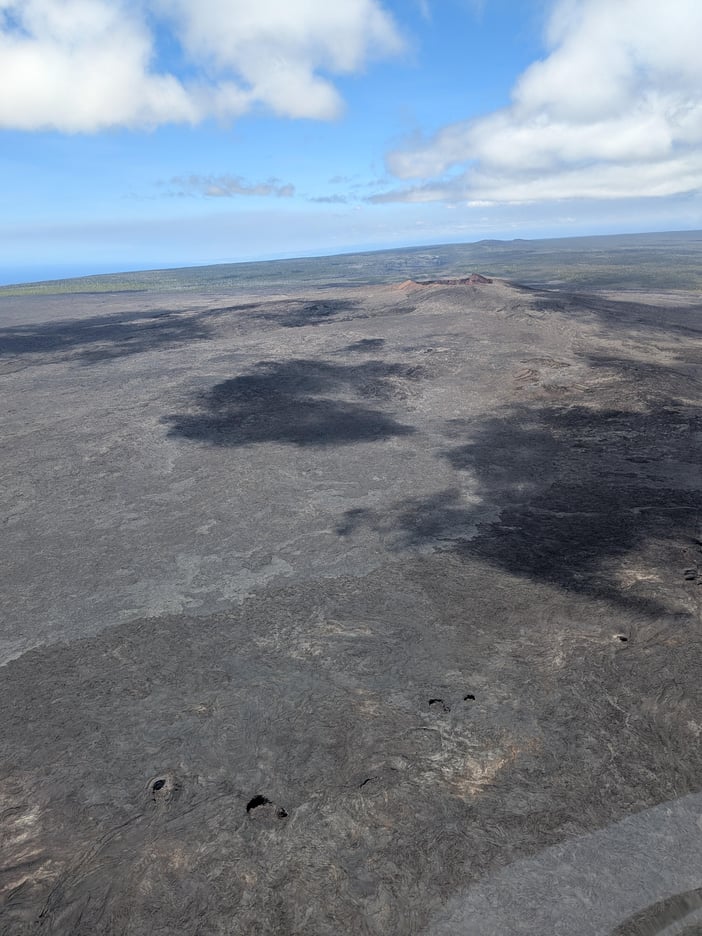
When the mountain is quiet, the flight shows what it always shows between episodes: steam vents, the vast caldera formations, hardened flows from past eruptions. Crater walls, fissures and sulfur deposits stay dramatic on their own, and the island's other landscapes carry the flight.
There is a second layer to know. During an active eruption, temporary flight restrictions can close the airspace: the standing restriction over Halemaumau runs two nautical miles out with a 5,000-foot ceiling, and the park's air-tour routes avoid the summit entirely. So an eruption can put lava in view or push it further away.
When the visit as imagined cannot happen
Kilauea is currently paused between eruption episodes, with no active lava at the summit Book for the crater, steam and lava fields as their own spectacle, and treat molten rock as a bonus if activity returns
Safety during an eruption is handled by distance: flights stay high enough that fumes are not an issue in the cabin. Book with calibrated expectations and treat molten rock as a bonus.
Tour for this
Hilo: Hawaii Volcanoes National Park Flight4.2★ (272) · 1 hour · Free cancellation
Kona, Waikoloa or Hilo - where should you fly from?
This choice shapes everything, because the island is bigger than visitors expect. Hilo sits right beside Kilauea, so flights there are shorter and cheaper, running about 50 to 55 minutes in the air.
A Kona departure pays for it: a volcano tour from the west side runs about 1 hour 45 minutes because most of that is the crossing.
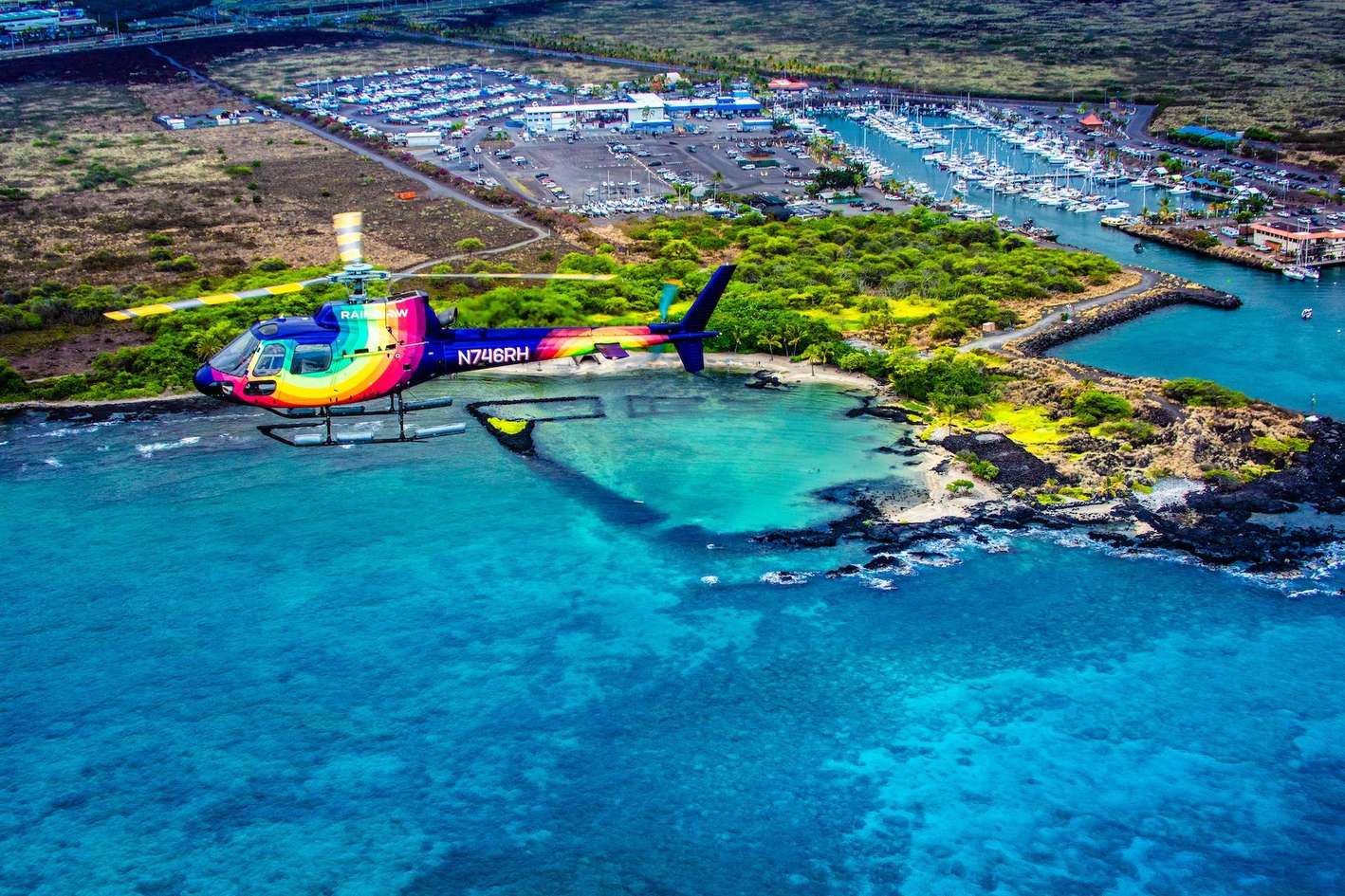
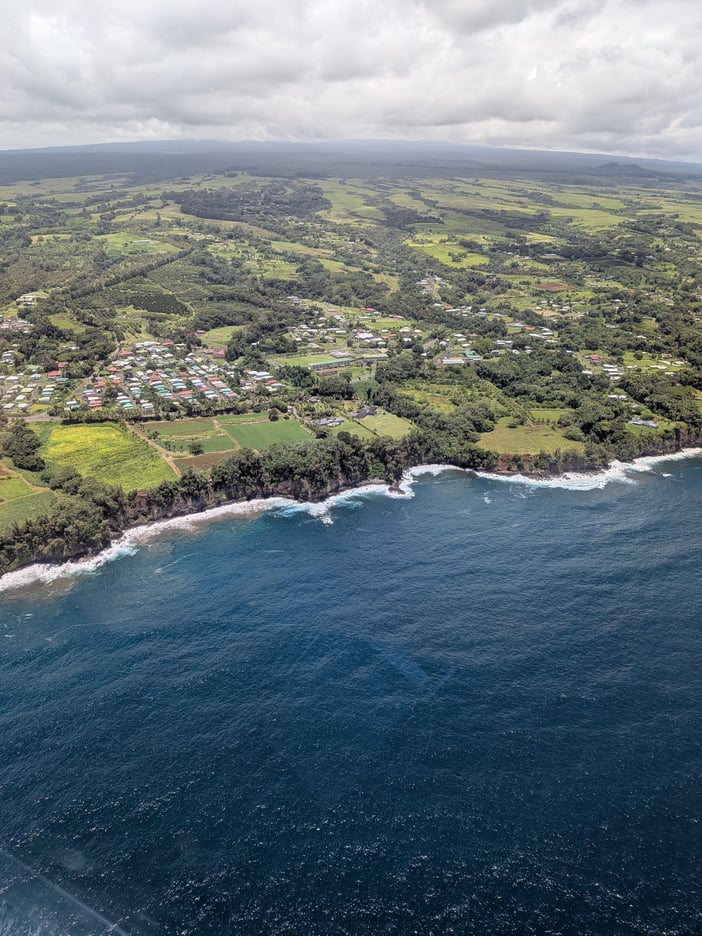
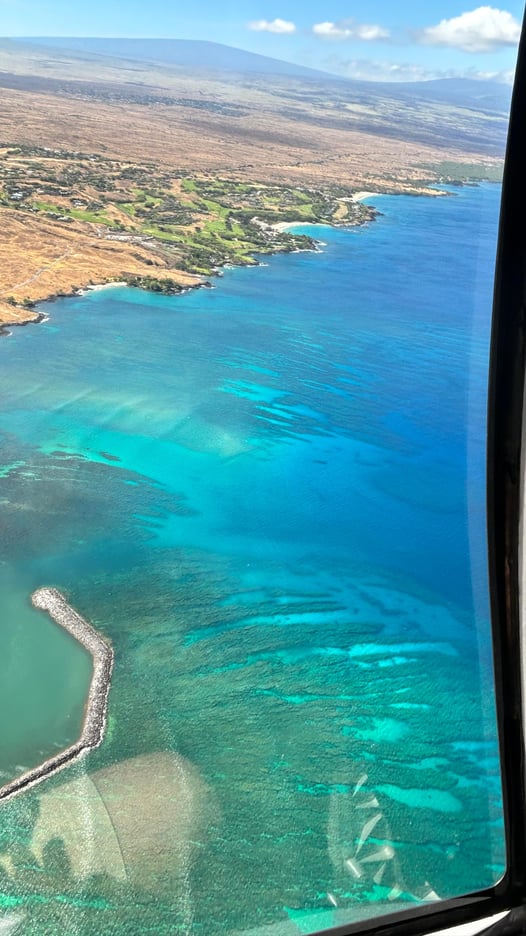
What you get for the extra airtime is breadth. West-side departures cover the Kohala Coast, the Waipio Valley cliffs and the Hamakua waterfall corridor along with the volcano. Hilo flights narrow the focus to Kilauea and nearby waterfalls, retracing the same path back over old lava fields.
One warning from people who have tried it: driving from Kona or Waikoloa to catch a cheaper Hilo flight can backfire. The Saddle Road crossing takes 1.5 to 2.5 hours each way, and if weather cancels the flight you face the drive again. Stay near the base you book.
Choosing a departure base
Hilo
Waikoloa
Kailua-Kona
Drive from the resorts
1.5 to 2.5 hours across Saddle Road
About 6 minutes from Waikoloa resorts
About 23 minutes from town
Flight length
50 to 55 minutes
50 minutes to 2 hours
30 minutes to 1.5 hours
Scenery focus
Kilauea and volcano close-ups
Kohala cliffs, valleys, waterfalls and volcano on long routes
Kona coast, Hualalai and volcano on long routes
Best for
Volcano-only focus at the lowest cost
A broad island sweep from the resort strip
A short coastal loop or a full volcano crossing
Hilo
Drive from the resorts
1.5 to 2.5 hours across Saddle Road
Flight length
50 to 55 minutes
Scenery focus
Kilauea and volcano close-ups
Best for
Volcano-only focus at the lowest cost
Waikoloa
Drive from the resorts
About 6 minutes from Waikoloa resorts
Flight length
50 minutes to 2 hours
Scenery focus
Kohala cliffs, valleys, waterfalls and volcano on long routes
Best for
A broad island sweep from the resort strip
Kailua-Kona
Drive from the resorts
About 23 minutes from town
Flight length
30 minutes to 1.5 hours
Scenery focus
Kona coast, Hualalai and volcano on long routes
Best for
A short coastal loop or a full volcano crossing
Match the base to where you sleep and the route follows.
The slot matters as much as the route. Mornings between 8 and 11 am bring the calmest winds and clearest skies over both the volcanic craters and the Kohala valleys, before daytime heating and trade winds build cloud and choppy air. From midday the interior ridges cloud over, peaking between 2 and 4 pm.
The two coasts differ. On the Kona side, sea breezes push clouds up the slopes by early afternoon, so an early departure rides nearly cloud-free water. On the rainy Hilo side, the pattern flips: early mornings see showers, and late morning around 11 am is the sweet spot that misses them.
Season matters for waterfalls. Winter, from November through March, loads the Hamakua and Kohala catchments with storm rain, and the falls run thunderous. Summer keeps a steady, moderate flow from routine trade-wind showers. Either way the water runs; winter simply turns the volume up.
Rainfall varies across the year
August is one of the wetter months at this point, unlike the generally drier summer pattern elsewhere.
HighestApr, Aug96 to 101 mm
In betweenMar, May, Oct to Nov69 to 82 mm
LowestJun to Jul, Sep, Dec to Feb52 to 66 mm
Darker months: higher, from 52 to 101 mm
Tap a month to read it.
Read that against your own dates: a March or April flight catches the strongest falls, an August one catches the calmest Kona mornings. Clouds can still cap the volcano on any given day, which is why the next chapter's booking rule exists.
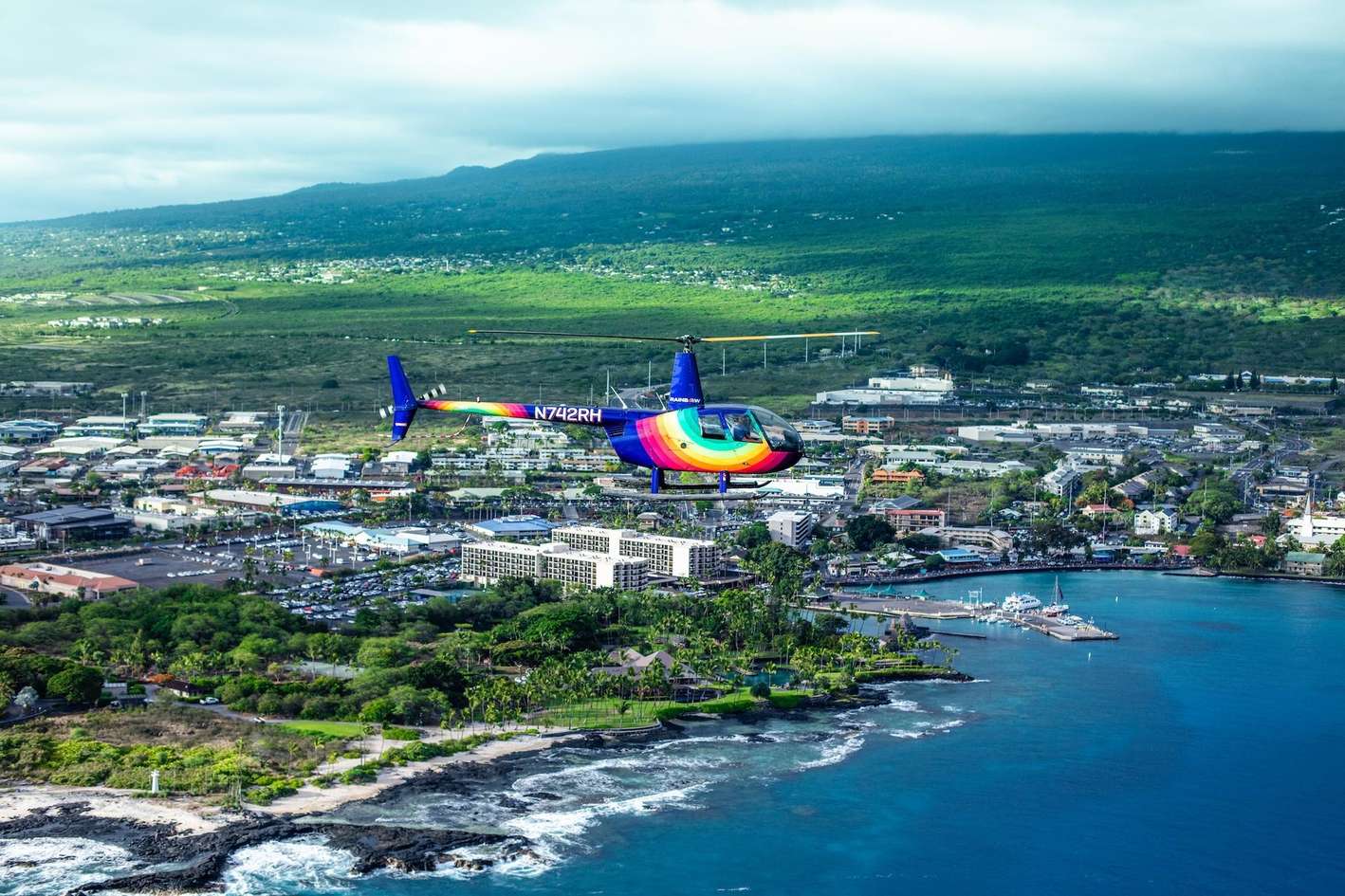
Three shapes of flight cover most visitors. A Kona coast loop runs about 30 minutes, hugging Kailua Bay and the shoreline. A Kohala cliff flight runs 50 to 70 minutes.
And the full sweep, the nearly two-hour Big Island Spectacular from Waikoloa, packs rainforest, waterfalls, valleys, sea cliffs and volcano into one departure, which is the highest concentration of scenery per minute on the island.
The airplane question comes up every time: fixed-wing tours cost roughly half and give panoramic views, but they fly higher and cannot hover, so families with children under ten sometimes prefer them. For a close, agile look at valleys and crater rims, the helicopter wins.
Timing your booking matters too. In peak summer and the December-January holidays, slots sell out two to four weeks ahead, and prime morning departures can need 30 days to six weeks.
How to choose a Big Island helicopter tour
Check
Why it matters
Our pick
Route coverage
Coasts, valleys and craters seen depends on the route flown
The Kohala Coast Adventure runs the sea cliffs and deep valleys of the north shore
Flight duration
Long enough to reach the far sights, short enough for your day
50 minutes standard, or 70 with a waterfall landing among 1,200-foot cliffs
Doors on or off
Open doors mean wind chill and strap rules; closed cabins stay climate-controlled
Both options are offered, plus a private version
Aircraft type
Raised theater seating and bubble glass beat middle seats
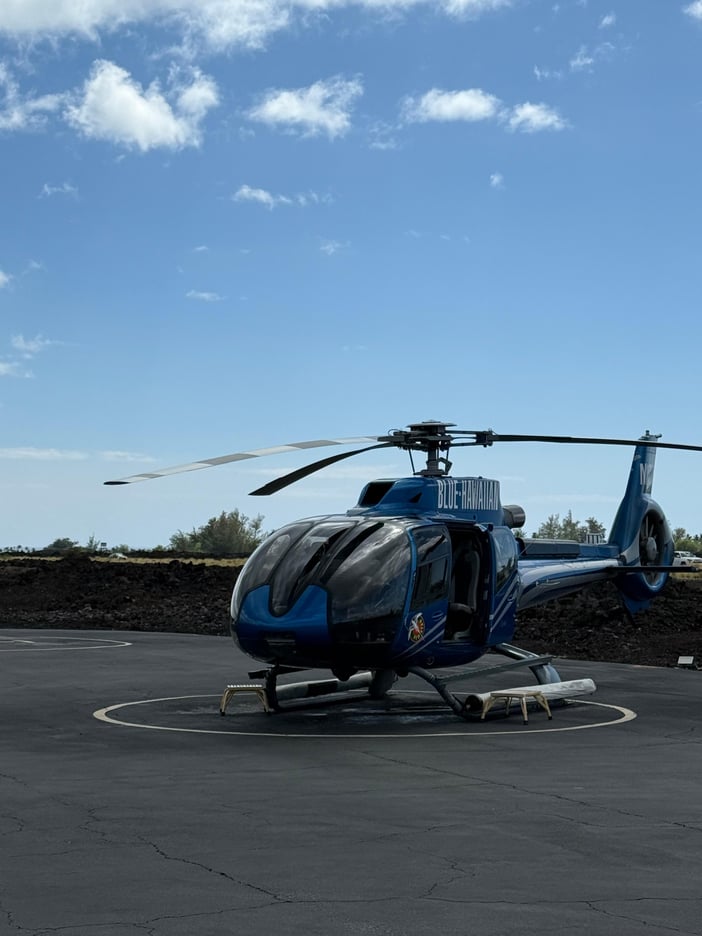
An Eco-Star EC-130 with wide viewing windows
Narrow the field to one or two and book the morning slot early.
Tour for this
Big Island: Kilauea Volcano Eruption Heli Tour - Door On/Off4.4★ (5) · 1.5 hours · Free cancellation
The drive decides whether departure morning is calm or frantic. From Waikoloa Beach Resort, the Waikoloa Heliport is about six minutes away, directly across from the resorts, and Kona International Airport sits 31 minutes south. From Kailua-Kona, the airport is a 23-minute drive and the heliport about 36.
Hilo is the one to think twice about. The Saddle Road crossing from Kailua-Kona runs about an hour and a half without stops, and official airport guidance says allow 1.5 to 2.5 hours for weather changes and elevation along the highway.
It is a beautiful drive; it is also the reason a cheap east-side flight costs a whole morning before it starts.
Getting there, by the clock
Waikoloa Heliport from Waikoloa resortsA six-minute hop, the shortest walk from bed to rotor on the island
Easy
Kona International Airport from the resort coast31 to 41 minutes from Waikoloa, 23 from Kailua-Kona, allowing traffic
Moderate
Waikoloa Heliport from Kailua-KonaAbout 36 to 50 minutes up the coast highway
Moderate
Hilo Airport from the west side1.5 to 2.5 hours each way over Saddle Road, twice if weather cancels
Difficult
At Kona International, the tour pads sit in the general aviation area south of the passenger terminals. Budget the drive, then add the check-in hour from the next chapter.
Driving yourself
Rent a car for the driveCompare cars from the rental companies in one search, then pick yours.
Check-in day starts earlier than the takeoff time. Plan on arriving 60 minutes before departure at Waikoloa, Kona and Hilo pads, because everyone gets weighed and seated for balance before the safety briefing.
Dress for the photos. Solid dark colors such as black or navy keep your own reflection out of the window glass, which is why operators recommend them for doors-on flights. Closed cabins are climate-controlled, so a heavy jacket cooks; casual clothes are enough.
Doors off is a different animal: with the wind, the cabin runs 10 to 15 degrees cooler than the ground, so long pants, a long-sleeved shirt and a light windbreaker earn their place.
Loose items stay behind on open-door flights: hats, scarves, purses, water bottles, selfie sticks and spare lenses all get stowed, and anything you photograph with must ride on a wrist or neck strap. Tie long hair back tightly. Eyeglasses are fine; the headsets hold them.
Pro tipTake ginger chews or non-drowsy motion sickness medication before takeoff; it only works in advance.
The flight itself is smooth for most people, even those who get queasy in cars. Motion comes from banking turns, so keep your eyes on the horizon and your head movements slow. A tip for the pilot at landing is customary, so keep a little cash aside.
Weight limits, seat assignments, kids and health rules
The unglamorous rules catch more people than the weather does, so run your party through them before paying. Seats are assigned at check-in by FAA weight-and-balance calculations, which is why nobody picks their own seat and no operator can promise your family sits together.
Ask at booking if anyone in your group is near those numbers.
A few health rules are firm: no scuba diving within 24 hours of the flight, and passengers unable to sit upright do not fly. ::myths What people get wrong before boarding You can pick your own seat or the front one | Seating is set by weight and balance software at check-in, so nobody chooses Every passenger gets a window seat | Small four-seat aircraft guarantee one; larger six-seat helicopters have middle rear seats with partial obstruction Children fly free or sit on a lap | On most flights every passenger 24 months and older buys a full-fare seat
For the nervous flyer, the record is the place to start. Fatal air tour accidents in Hawaii average less than one per year despite heavy daily flight volumes, and a study of Hawaii helicopter crash rates found them nearly halved after the island-specific safety rule of 1994.
The rules behind that are concrete. Tour flights follow stricter federal standards, pilots may only fly at heights and speeds that allow a safe landing after engine loss, and no flight goes below 1,500 feet or closer than 1,500 feet to people or property. Every flight runs on a performance plan the pilot must follow.
Engine failure is the fear most people carry, and the answer is autorotation: helicopters glide down under the spinning rotor, and pilots train it repeatedly. Over open water, single-engine aircraft carry floats and passengers wear life vests until the flight is back over land.
The last reassurance is the ground crew. They will walk you onto the pad showing exactly where not to stand, away from the tail rotor, crouching low under the main rotor, and clear of the upslope side on a hill.
Listen, follow, and board. Most nervous first-timers report the flight felt smooth and the briefing settled them before takeoff.
What happens if the weather turns on your flight day
Weather is the one variable nobody books around, so know the playbook in advance. When poor weather or low clouds cancel a flight, operators give a full refund or a rescheduled slot, and good operators cancel or reroute rather than fly into heavy rain or low ceilings.
The terms differ on reroutes. Most operators reschedule a weather-cancelled tour, and if the new date does not work for you, the refund follows with no penalty.
But one operator gives no refund or discount when weather changes the route, the sights or the flight time mid-air, which is why the booking terms deserve a read before you pay.
A mid-flight change is common on the east side, where Hilo rain squalls can force the pilot to swap a crater leg for coastal lava fields and waterfalls.
Pilots on park routes must exit when weather breaks the planned altitude and find another route that works. Rain and clouds may change the route, and the volcanic landscape can still deliver.
When the day changes
If this happens
What happens then
Weather cancels the flight
A full refund, or a rescheduled slot on another day
The operator moves your tour to another date for safety
Accept the new slot, or take the full refund if it does not fit your trip
Clouds or vog close the volcano leg
The pilot reroutes to coastal lava fields and rainforest waterfalls, with no discount for the changed route
Rain builds over the Hilo side
Expect a delay, a reroute, or a cancellation, decided near departure time
This is why the flight belongs on your first or second morning, not the last day: a cancellation with buffer days is an inconvenience, one on the final morning is a loss. Vog can join the cloud list on still days, and pilots weigh it the same way.
What to pair with your flight - a day around the heliport
The flight works best as the anchor of a day planned around the departure base. On the Hilo side, everything sits close: Liliuokalani Gardens on Hilo Bay, Wailoa River, Reeds Bay and the beach parks at Onekahakaha and Richardson.
Rainbow Falls runs through Wailuku River State Park 1.5 miles from downtown, and Boiling Pots lies two miles upriver, so both fit one 45-minute stop.
Akaka Falls makes a natural afternoon: a 442-foot drop seen on a paved 0.4-mile loop, about 25 minutes north of town. The farmers market opens daily at 7 am downtown, and the tsunami museum runs from 10 to 4 on Kamehameha Avenue.
And if the flight lit the volcano itch, the park itself is only about 45 minutes from Hilo by road, versus a 2-to-3-hour drive from Kona Airport.
The Kona side pairs differently. Near the airport at Keahole Point sit the Kona Sea Salt Farm and the seahorse farm, and Kaloko-Honokohau National Historical Park lies three miles south with coastal trails, petroglyphs and historic fishponds.
A morning flight, a late breakfast and an afternoon of those, and the heliport day becomes one of the fullest on the itinerary.
More to book around Waikoloa Village
Live dates and prices
Book it, then guard the morning
The flight is worth the ticket when the route matches where you stay and the slot sits early in your trip.
A morning between 8 and 11 am, booked for day one or two with buffer days behind it, is the whole strategy. Everything else, the clothing, the check-in hour, the weight rules, is preparation you now have.
Go ifYou want volcanic terrain, roadless valleys or sea cliffs that no rental car can reachYou are staying near Waikoloa or Hilo and can fly from the closest baseYou can book several weeks ahead for a peak-season morning slot
Skip ifYour only free day is the last morning of the trip, when a weather cancellation cannot be rebookedYou are flying mainly for active lava during a pause between eruption episodesSomeone in the party is scuba diving within 24 hours of any possible flight time
Our pick to book
Waikoloa: Big Island Spectacular Helicopter Tour4.2★ (10) · 105 minutes - 2 hours · Free cancellation
Your questions about helicopter tours on the Big Island, answered
Quick answers to the questions travelers ask before booking a flight over the island.
Waikoloa Village2026
Morning light on the caldera, steam drifting past the window, and valleys no road touches. Book your first or second morning here so weather never gets the last word.
Can you see lava on the Big Island from a helicopter?
Sometimes. Kilauea erupts in short windows, so visible red lava is never guaranteed on a given flight. During a pause you will still fly over steaming vents, vast crater formations, and hardened lava fields from past eruptions.
Is a volcano flight worth it if Kilauea is not erupting?
Most volcano flights stay visually rewarding even without surface lava, because the crater formations and contrasting terrain are dramatic on their own. Many visitors find the Kohala Coast valleys and waterfalls even more impressive when the volcano is quiet, so a west-side route is a good companion choice.
Should I fly from Hilo or from Kona or Waikoloa?
Hilo sits close to Kilauea, so flights from there are shorter and focus on the volcano. Kona and Waikoloa departures cover more of the island, including the Kohala Coast, Waipio Valley cliffs, and the Hamakua waterfalls.
If you are staying on the west side, departing from Waikoloa saves you at least four hours of round-trip driving to Hilo.
How far is Hawaii Volcanoes National Park from Kona Airport?
Driving takes about 104 to 106 miles and roughly two hours and 25 minutes without traffic. That distance is why most visitors staying in Kona book a flight that departs on their side of the island and leave the cross-island drive for a separate park day.
What happens if clouds or vog block the volcano?
Pilots divert to other sights when low cloud, rain, or thick vog hides the summit, often flying toward coastal lava fields and rainforest waterfalls instead. If weather cancels the flight outright, operators offer a full refund or a rescheduled date.
Can you drive from Oahu to the Big Island?
There is no road link between the islands, so you fly. A nonstop commercial flight from Honolulu takes about 45 to 60 minutes, landing at Kona or Hilo depending on your plans.
Does every passenger get a window seat?
It depends on the aircraft. Smaller four-seat helicopters give everyone an open-view seat, while larger six-passenger touring helicopters have middle rear seats where views can be partly blocked. Seats are assigned at check-in by weight to balance the aircraft, so you cannot pick your own.
What time of day is best for a helicopter tour?
Aim for a morning slot between 8 and 11 am. Winds are calmer and skies clearer then, before trade winds and afternoon clouds build over the volcanic summits and the Kohala valleys.
When should I book my flight during my vacation?
Book it for the first days of your trip. Weather can cancel a flight, and an early slot leaves you buffer days to reschedule. Flying early also gives you an aerial overview that helps you plan the rest of the island by land.
How far in advance do flights sell out?
During peak summer and the winter holidays, prime morning slots typically book out two to three weeks ahead, and doors-off seats and Saturday departures fill even earlier.
Can helicopters fly directly over the Kilauea caldera during an eruption?
No. Temporary flight restrictions and the park's air-tour plan keep authorized tours away from the summit when volcanic activity closes the airspace. You still see the caldera region from approved routes nearby.
Is it safe to fly near an active eruption?
Flights during an eruption stay positioned so volcanic fumes rarely reach the cabin. The airspace, routes, and conditions are managed under federal air-tour rules, and operators cancel or delay when conditions turn unsafe.
One flight, volcano to waterfalls
Fly 105 minutes over Kilauea, the Hamakua rainforests and Kohala valleys from Waikoloa, with free cancellation up to 24 hours in advance.



 Your best match